Collection: Three-Color Snow
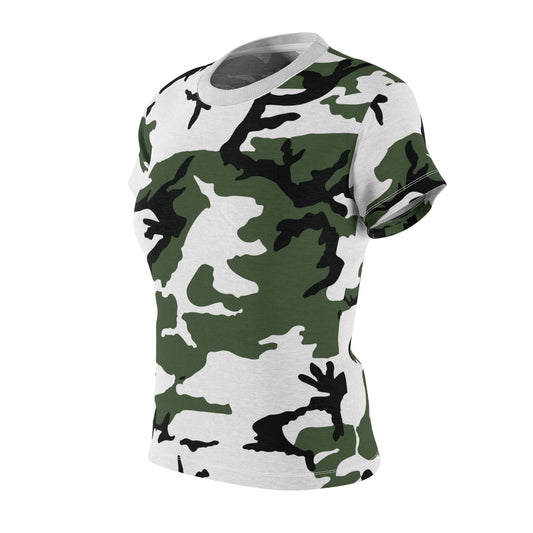
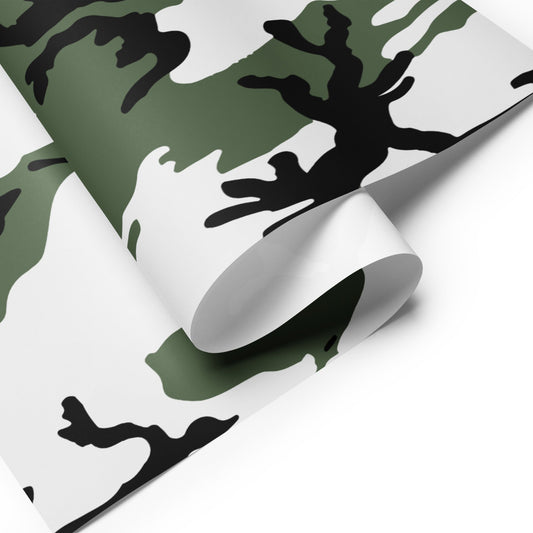
The Three-Color Snow camouflage—often labeled “Snow BDU” in archived military documentation—was developed in the 1990s by the Natick Soldier Research, Development and Engineering Center as part of ongoing winter concealment research. Intended for high-visibility snow environments, the design uses a simplified, high-contrast three-tone palette to break up the human outline against bright terrain, wind-scoured surfaces, and mixed snow cover. Although it was never formally adopted as a standard-issue pattern, it remains a notable example of practical cold-weather adaptation, drawing directly from the layout logic of U.S. M81 Woodland while rebalancing the color fields for winter conditions. Today, Snow BDU is recognized as an experimental offshoot with real functional intent—an M81-derived structure translated for snow, valued for its clear visual disruption, historical context, and the distinct Natick-era approach to camouflage development.