Intelligence
Declassified images from the US Army Natick Labs Archive
The U.S. Army’s Soldier Center at Natick maintains a photographic archive. It is known as the Natick Labs archive. It traces decades of uniform and camouflage experimentation across environments, seasons, and test regimes. A large tranche covering the late 1960s through the early 1990s has been digitized and made public. It reveals staged field evaluations and studio documentation of fabric swatches. The tranche also shows mannequin trials and controlled scene compositions that once resided behind classification. The scale is material for researchers. The corpus runs to many thousands of images. It spans clothing, load-bearing systems, protective gear, and visual signature studies. The declassification converts a closed technical record into an analyzable dataset. It clarifies how the Army built evidence around concealment, not just aesthetics.
The underlying research domain is multispectral signature control. Natick’s work and allied defense labs measure how textiles and coatings behave. They tune behavior in the visible spectrum and in the near-infrared and short-wave infrared bands. Adversary sensors and night-vision devices operate beyond human vision. Modern assessments look at reflectance profiles, spectral envelopes, and material formulations. These keep fabric signatures inside acceptable ranges under changing illumination and weather. The field treats camouflage as coupled optical engineering and materials science. It is not considered pattern art.
Testing combines human-in-the-loop trials with controlled photo-simulation. This approach ensures results are comparable across terrain types. Formal documentation describes detection probability against range, day and night. It includes blending scores at closer distances where a target is already found. Field lanes include prone, kneeling, and standing postures, and movement to contact. They also include squad drills. Photo-simulation allows many backgrounds while controlling distance, lighting, and motion. These methods yield metrics like R50 detection range. They quantify how much a pattern reduces acquisition probability relative to a baseline.

The archive helps situate the lineage from early ERDL leaf patterns and the later M81 Woodland. It tracks through arid schemes like the six-color and three-color desert uniforms. It then follows into universal and transitional families. It also clarifies the policy and acquisition context. This includes the 2000s move toward a single “universal” pattern. It covers the subsequent Army Camouflage Improvement Effort with industry and in-house entries. It ends with the Army’s selection and 2015 fielding of Operational Camouflage Pattern. OCP is a government-owned evolution of earlier Scorpion work. Public records explain why OCP displaced UCP and how licensing factored. They show how logistics contributed and how soldier feedback influenced the final decision. Testing data also drove the final decision.
Materials and specifications in the record show how pattern geometry and cloth interact. U.S. combat uniforms commonly use 50/50 nylon-cotton ripstop. Print classes and shade requirements are set in detailed specifications. These now explicitly include OCP as a covered class. These documents tie camouflage development to manufacturable standards. They ensure reproducible color, durability, and performance across vendors and production lots. Sensor threats extend into the infrared. Specifications and supplier guidance therefore emphasize spectral behavior, not just visual match. They push fabrics and dyes to meet defined envelopes so uniforms do not glow. This applies under image-intensified devices.

The Natick images matter because they expose how these abstractions were turned into evidence. One can observe scale and contrast studies and background-matching under foliage and rock. The images show seasonal palettes and macro-versus-micro element tradeoffs. They document the evolution from analog, organic shapes to more algorithmic or pixel-derived structures. The release also documents integration issues that rarely surface in publications. It shows how pattern repeat interacts with pocket placements, seam allowances, and wear points. It reveals how color drift is managed between apparel and load carriage. It illustrates how visual concealment is balanced against identification requirements. With the imagery public, historians and designers can validate claims about what was tested when. They can also see how conclusions were reached.
Declassification has strategic meaning. First, it reflects a lifecycle view. Once technologies, environments, and sensors advance, some historical test evidence can be released. This occurs without compromising current capabilities. Second, it allows external replication and critique of methods. This aligns camouflage evaluation with broader scientific norms. Third, it supports joint standardization pressures. These emerged after audits found fragmented, service-specific efforts created cost and logistics burdens. The transparency nudges future programs toward shared criteria and measurable outcomes.
The archive also frames where concealment research is going. Beyond static print, current work explores adaptive or reversible signatures. It also studies active control of emissivity for thermal management on cloth. Research demonstrates tunable infrared textiles and approaches to deceive algorithmic detectors. This indicates that camouflage now targets both human perception and machine vision pipelines. This trajectory confirms why Natick’s historical record is useful. It documents the transition from empirically tuned patterns for the human eye. It also shows movement toward systems that manage signatures across sensors and algorithms.
In sum, the Natick Labs archive is not a gallery of patterns. It is a record of how the Army constructed proof around concealment effectiveness across spectra, terrains, and tactics. The Army then embedded that proof into specifications, procurement, and doctrine. Its public release enlarges the technical community able to read that proof. It accelerates comparative studies and clarifies the link between laboratory measurement and field performance. It also connects those measurements to the uniforms that service members wear.


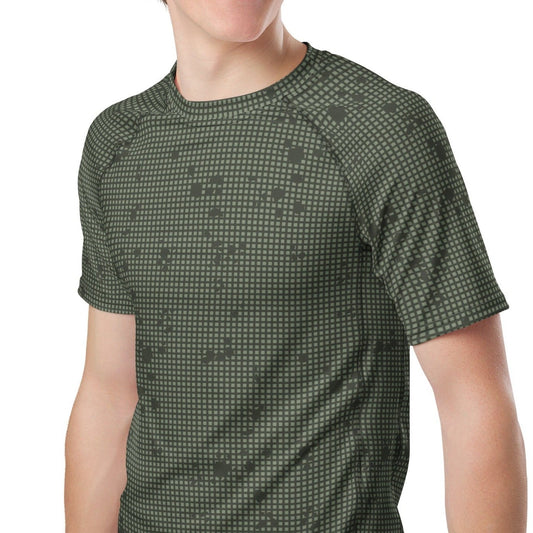
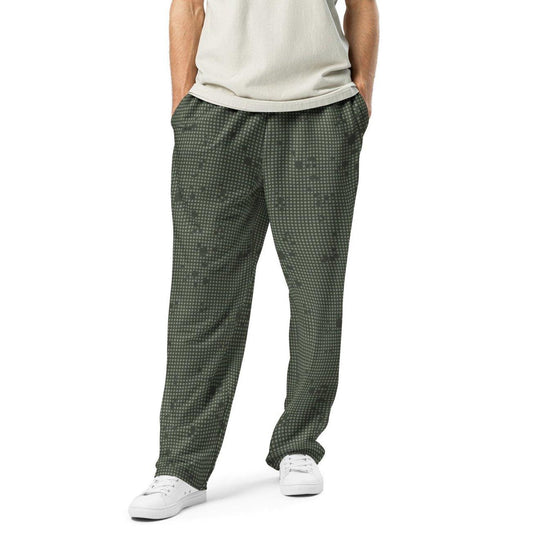
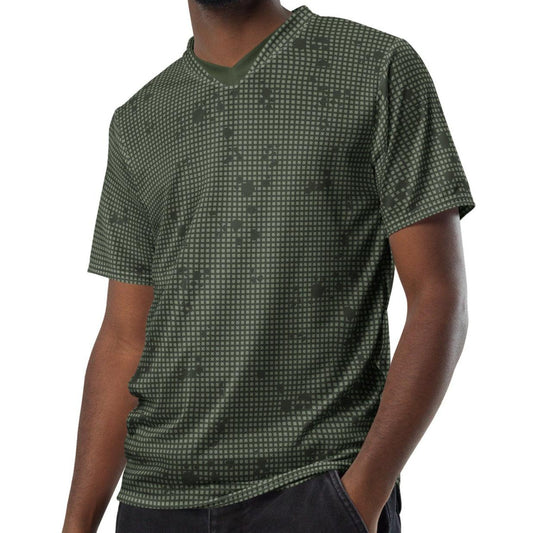
Soldier wearing Desert Night Camouflage Parka and Trouser U.S. Army Natick Soldier Research, Development & Engineering Center