Camouflage record
M81 Urban
The M81 Urban Camouflage Pattern is a recoloration of the original M81 Woodland design. Though not officially adopted, it was notably used by the US Marine Corps during a 1994 urban operations training at Fort Benning. This pattern was part of a study evaluating various urban camouflage options, including disruptive and monotone designs. However, both the woodland and 3-color urban camo performed poorly in urban night conditions.
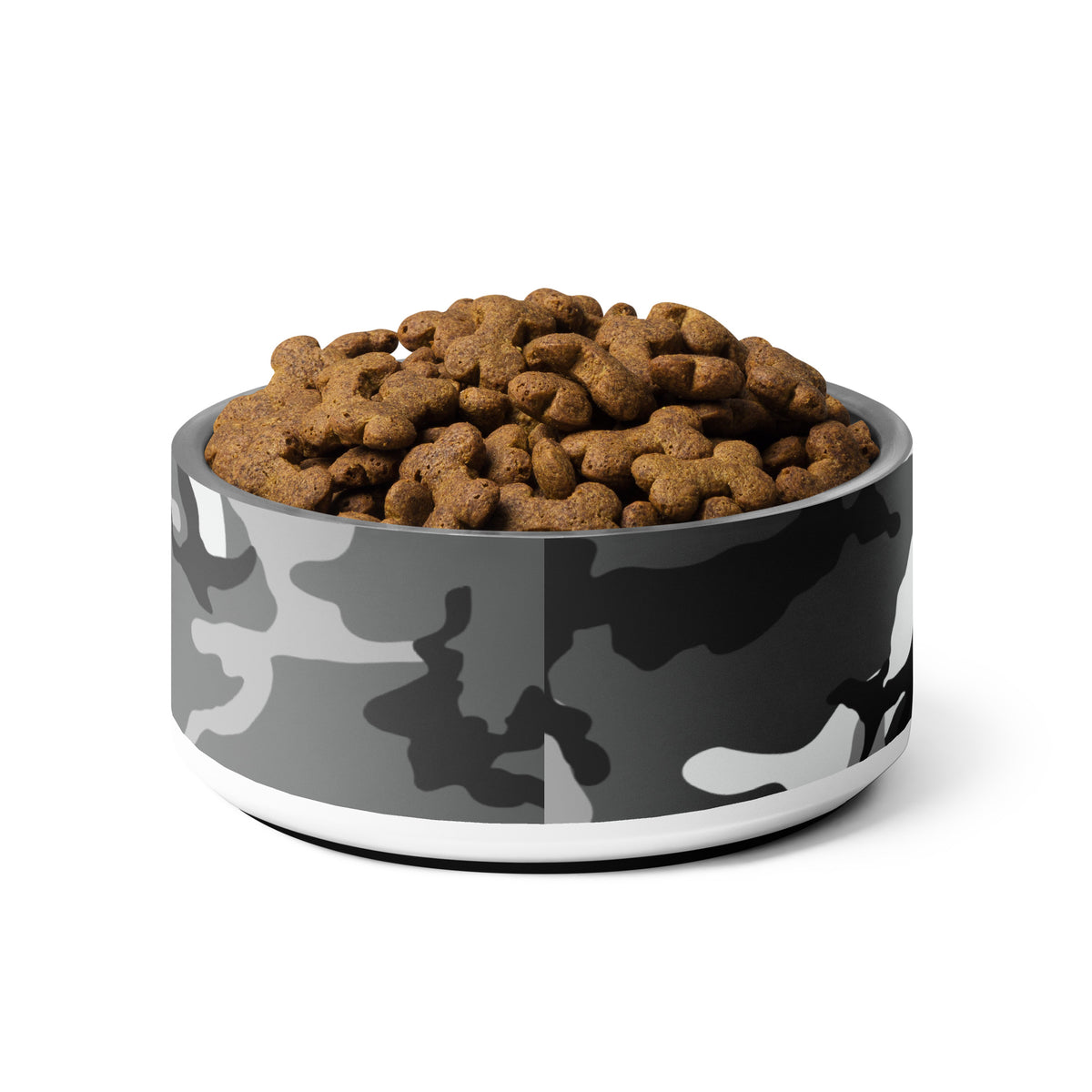
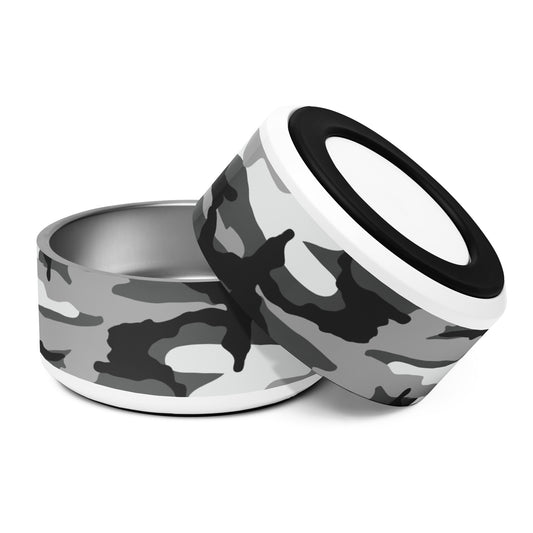
M81 Urban Camo Pet Bowl
Shipping calculated at checkout
Shipping restrictions
Important: This product cannot be shipped to South Korea, Hong Kong, Taiwan, Japan, or Singapore. If your shipping address is in these regions, please choose a different product.
Couldn't load pickup availability
The M81 Urban Camo Pet Bowl is a durable, stable feeding option for daily use, available in two sizes (18 oz and 32 oz) to suit different pets and portions. Built from double-wall stainless steel, it is designed to handle regular wear while keeping food and water contained and easy to clean. The exterior features an M81 Urban camouflage print, translating the classic woodland geometry into a grayscale palette of black, charcoal, and light grey for an urban-focused look that sits comfortably in a modern interior. An anti-slip rubber base helps keep the bowl in place on hard floors, reducing sliding and tipping during meals. The food-grade interior surface is smooth and non-porous for straightforward cleaning and maintenance, and the bowl can be placed in the dishwasher once the rubber base is removed.
Specs
- Camouflage: M81 Urban
- Two sizes: 18 oz and 32 oz
- Double-wall stainless steel
- Anti-slip rubber base
- Food grade safe
- Dishwasher safe when the rubber base is removed
Shipping & returns
Free US shipping on orders over $95. Shipping calculated at checkout. 30-day returns, with free return shipping in the US and Canada.
Camouflage record
M81 Urban
The M81 Urban Camouflage Pattern is a recoloration of the original M81 Woodland design. Though not officially adopted, it was notably used by the US Marine Corps during a 1994 urban operations training at Fort Benning. This pattern was part of a study evaluating various urban camouflage options, including disruptive and monotone designs. However, both the woodland and 3-color urban camo performed poorly in urban night conditions.