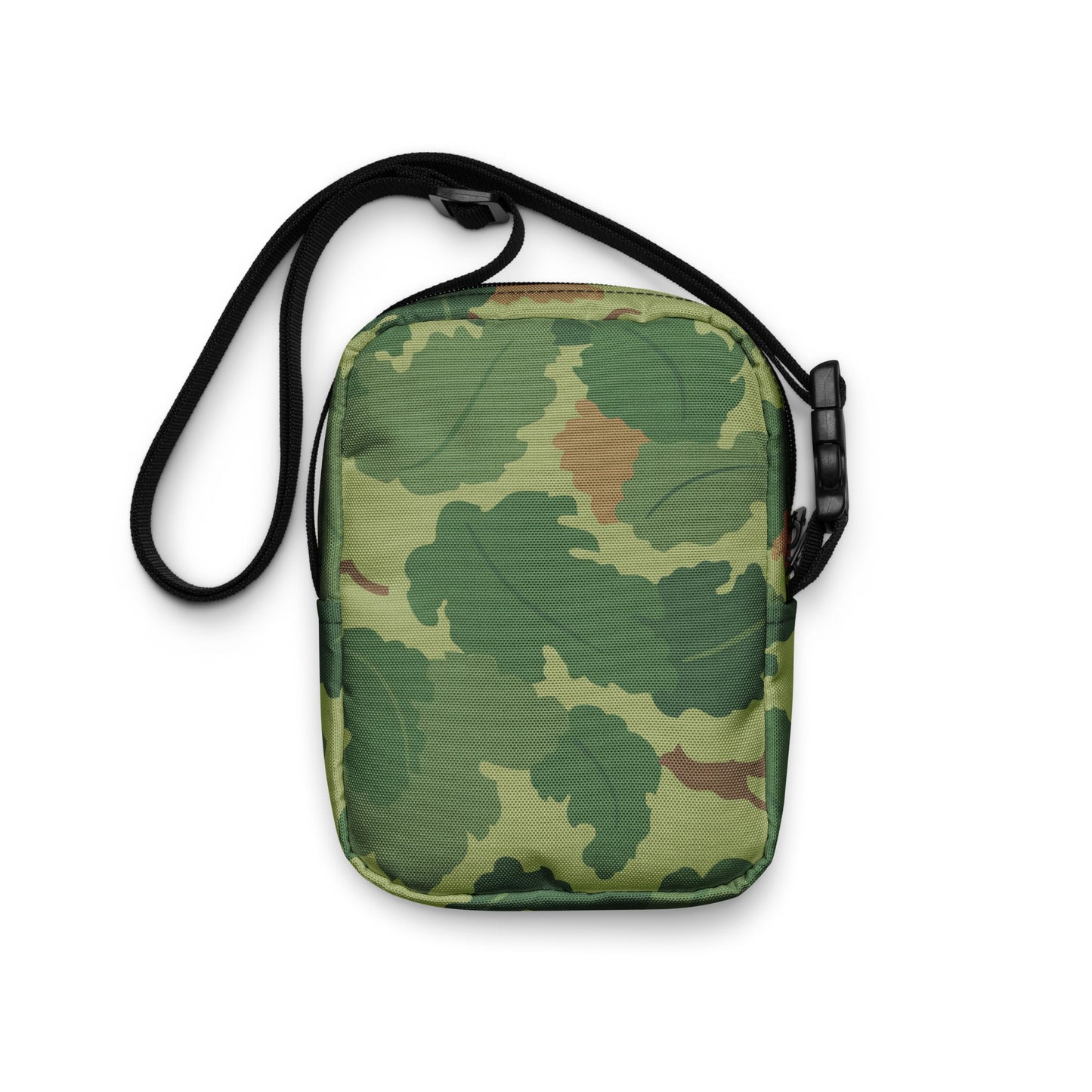
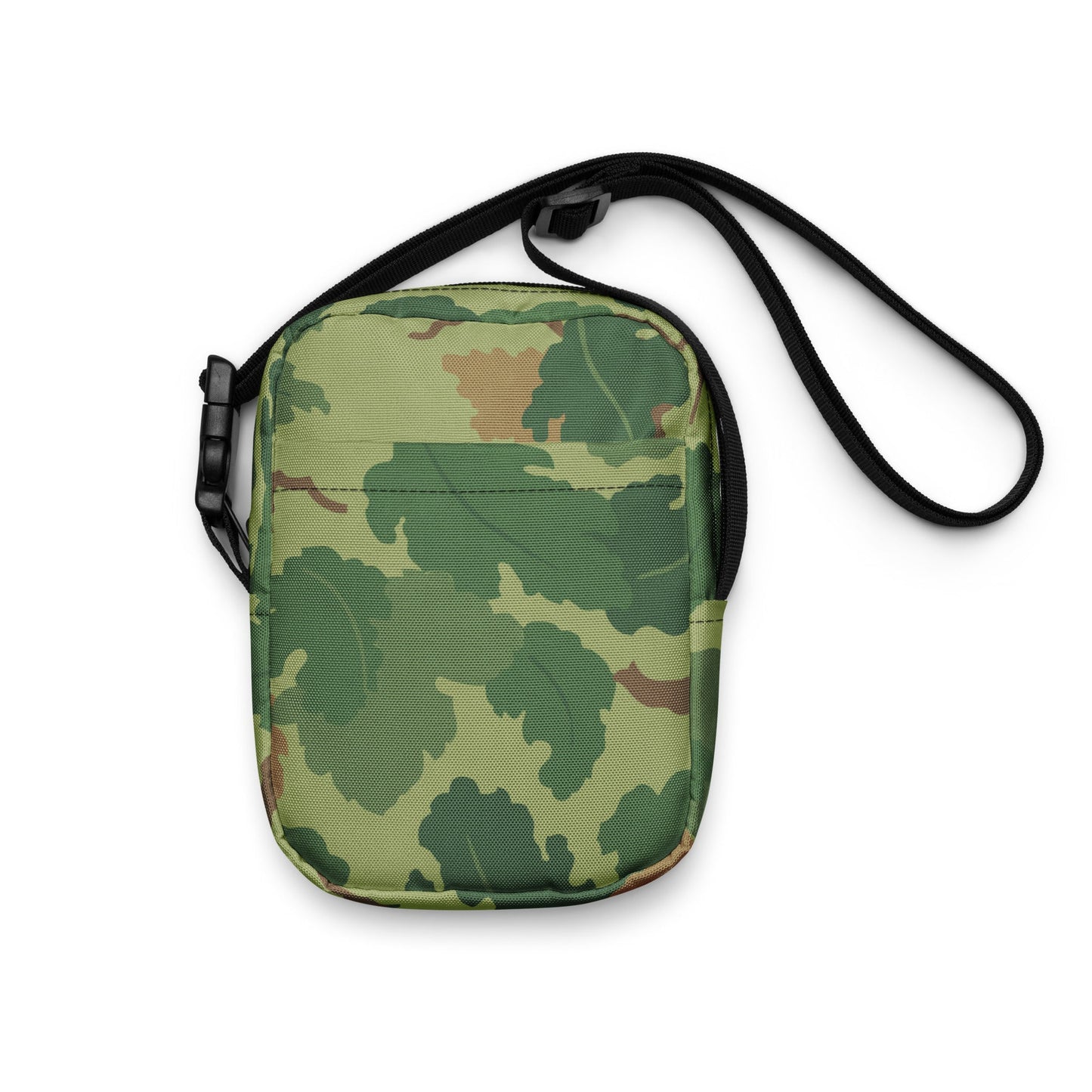
During WWII, the Marine Corps officially experimented with the M-42 Frog Skin battledress camouflage, while other U.S. troops, especially airborne pathfinders in Normandy, used hand-painted splotches, stripes, and foliage for camouflage. After the war, the US Military sought to develop a broader camouflage pattern. Between 1948 and 1953, field tests led to a trial in Panama of eight designs. Two complementary patterns emerged as effective: the green-hued Wine Leaf for spring and summer, and the brown Mitchell pattern for fall and winter, named after artist and former Marine Meldon Mitchell. This combination was implemented in the two-sided Pattern-53, with Mitchell becoming synonymous with both sides.
Shop all Mitchell Camouflage
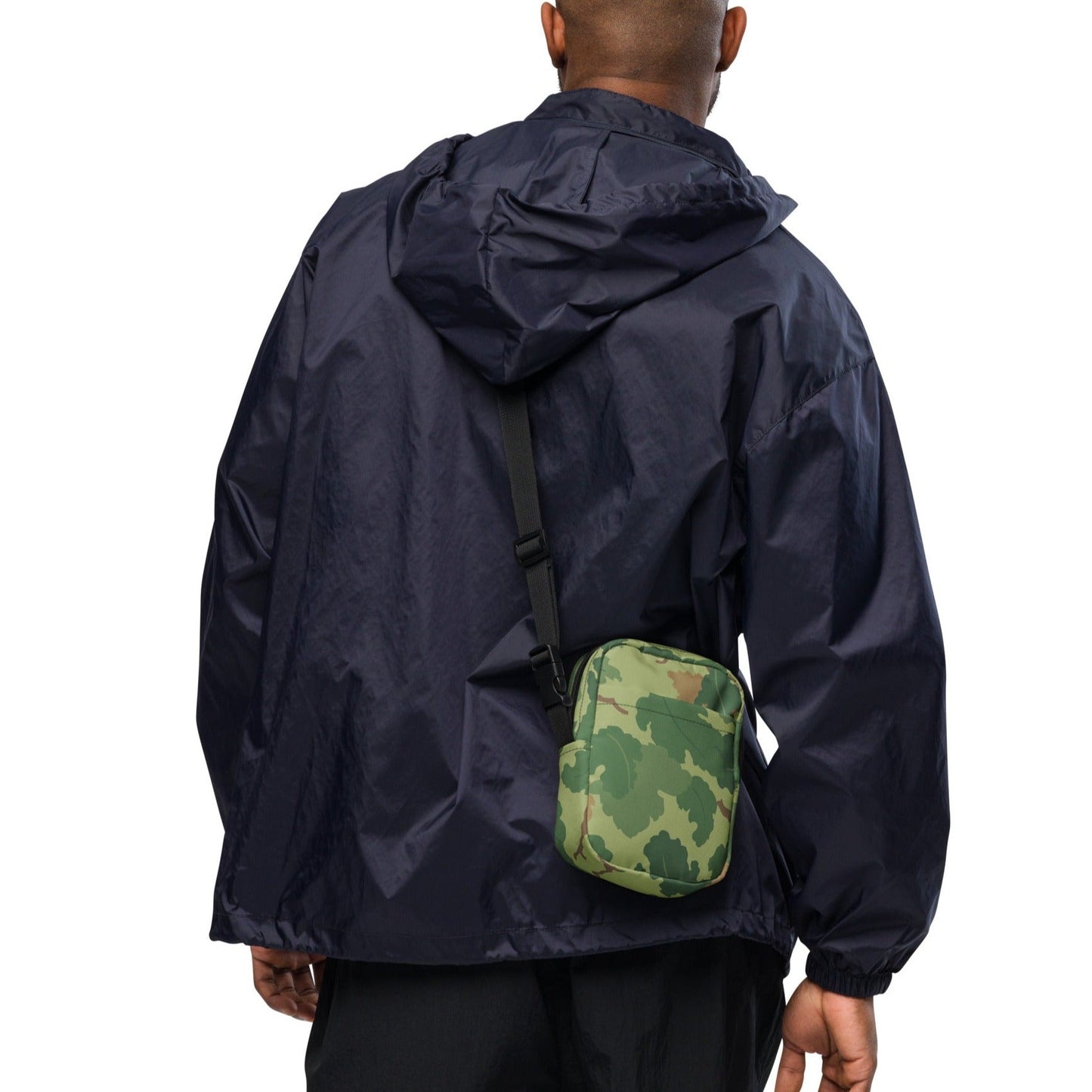
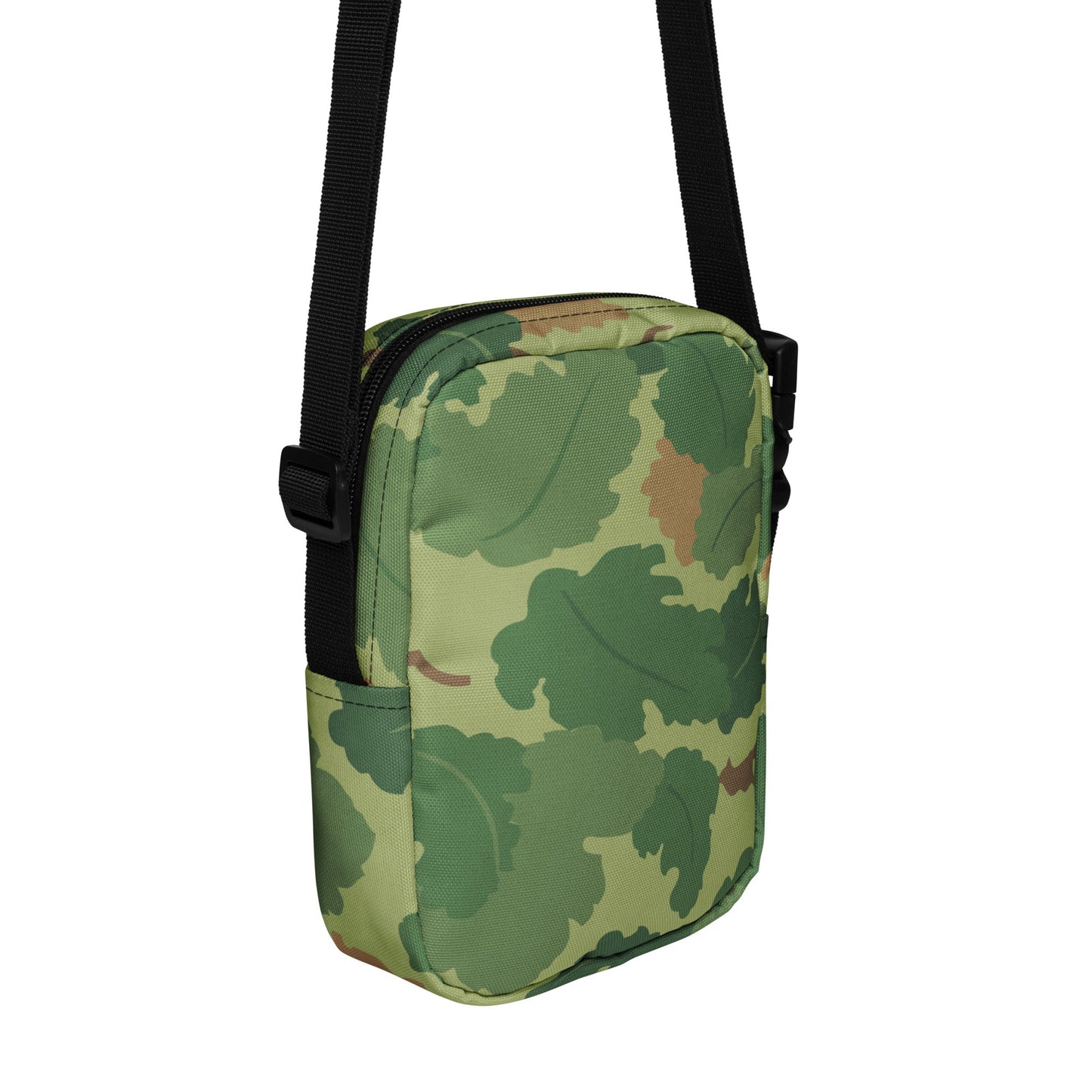
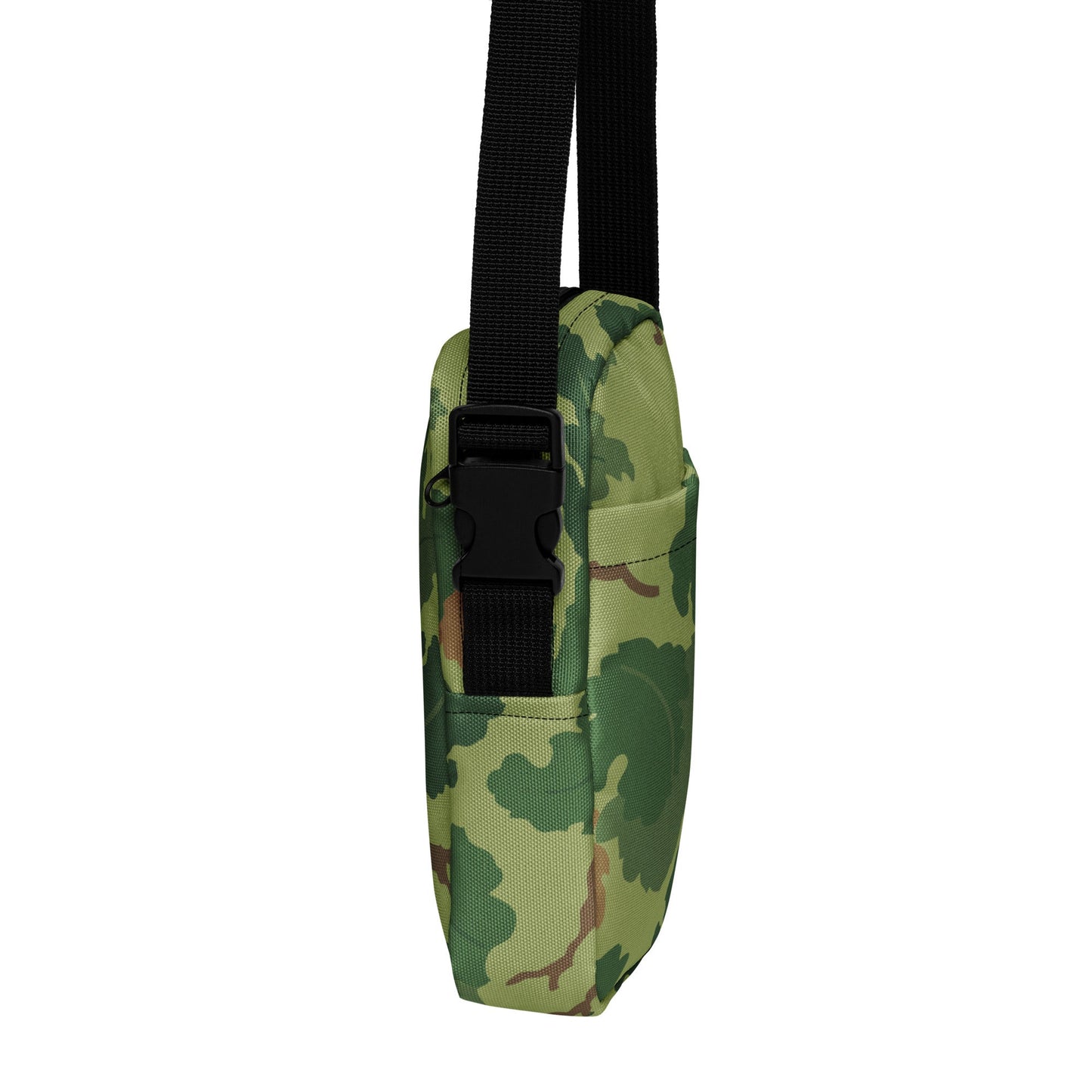
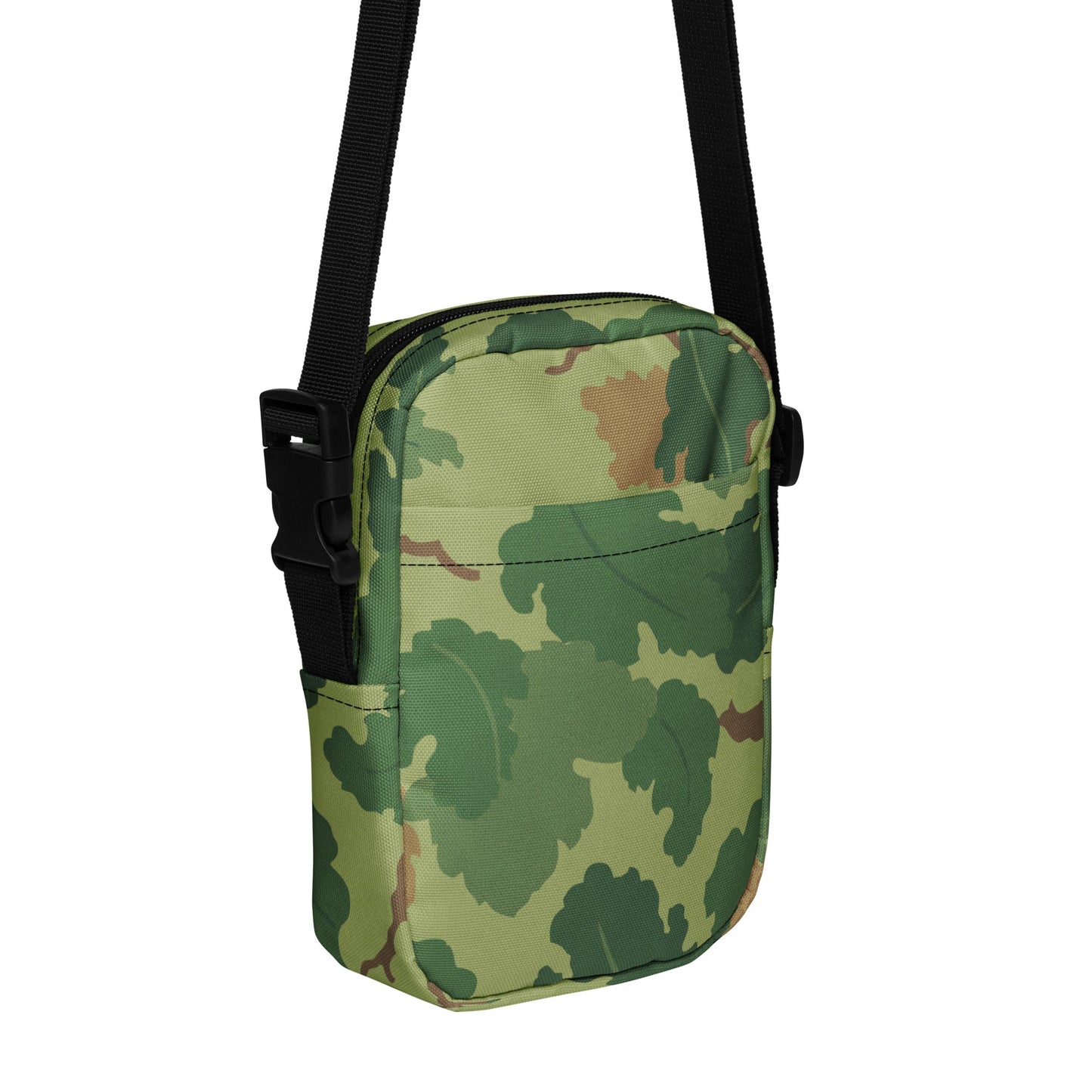
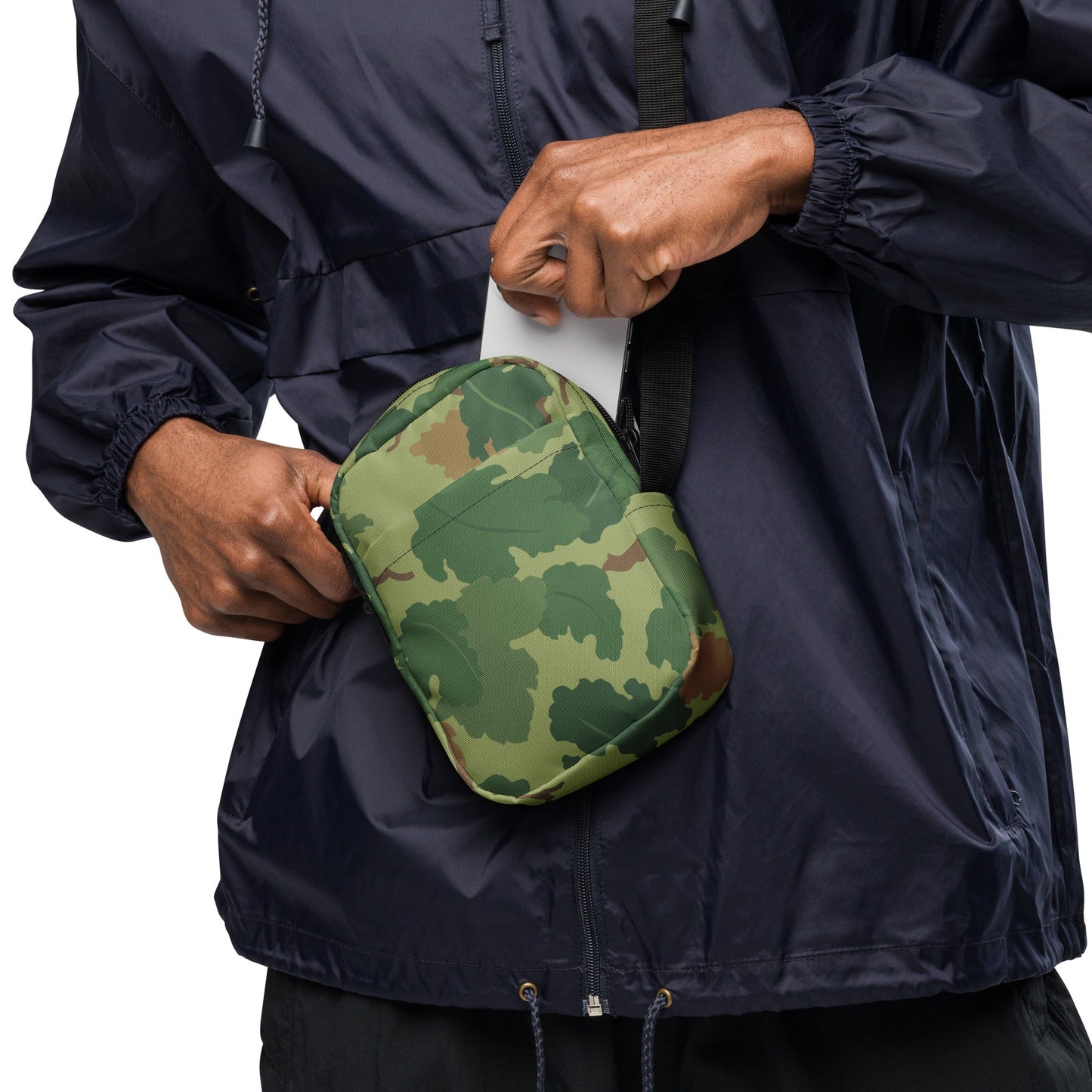
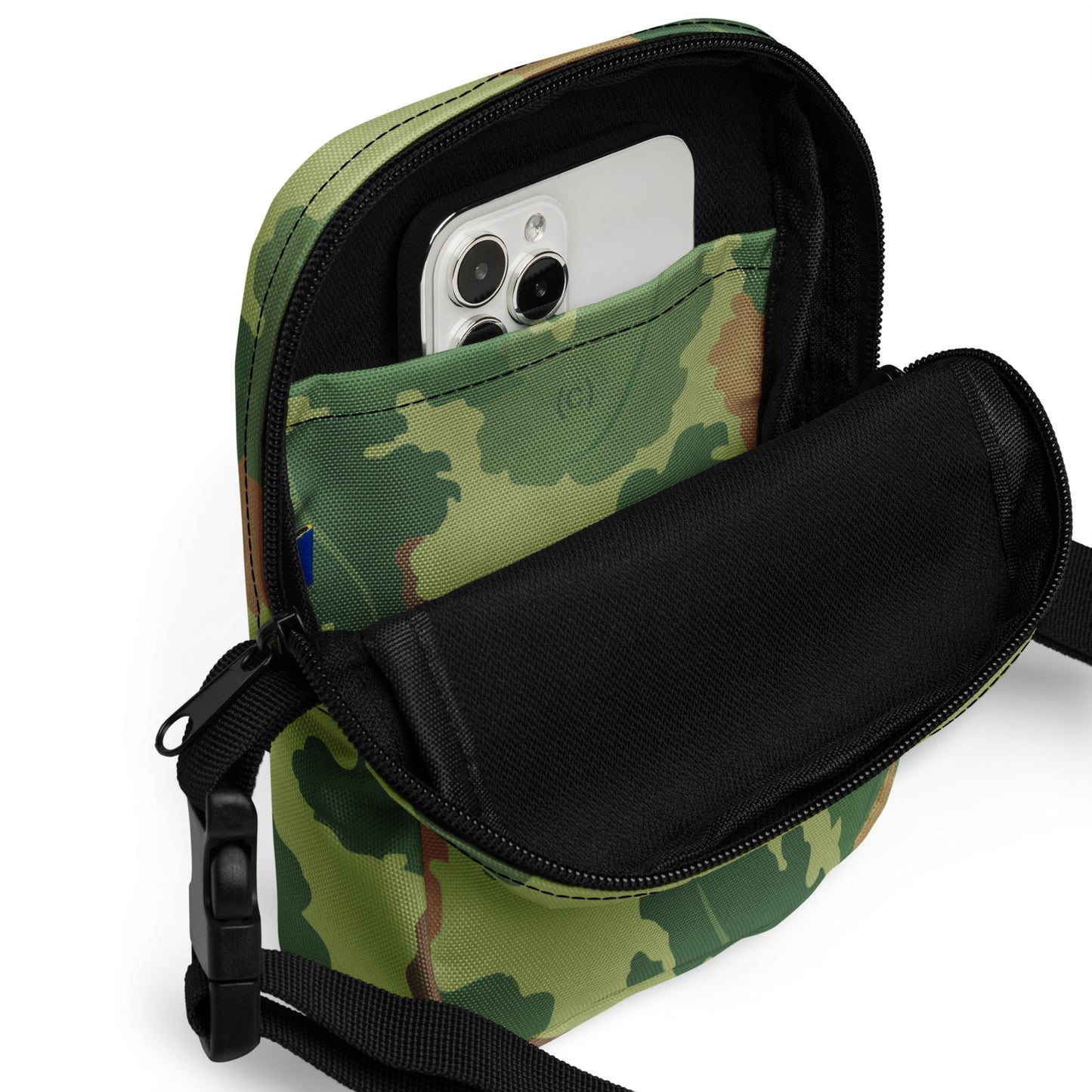
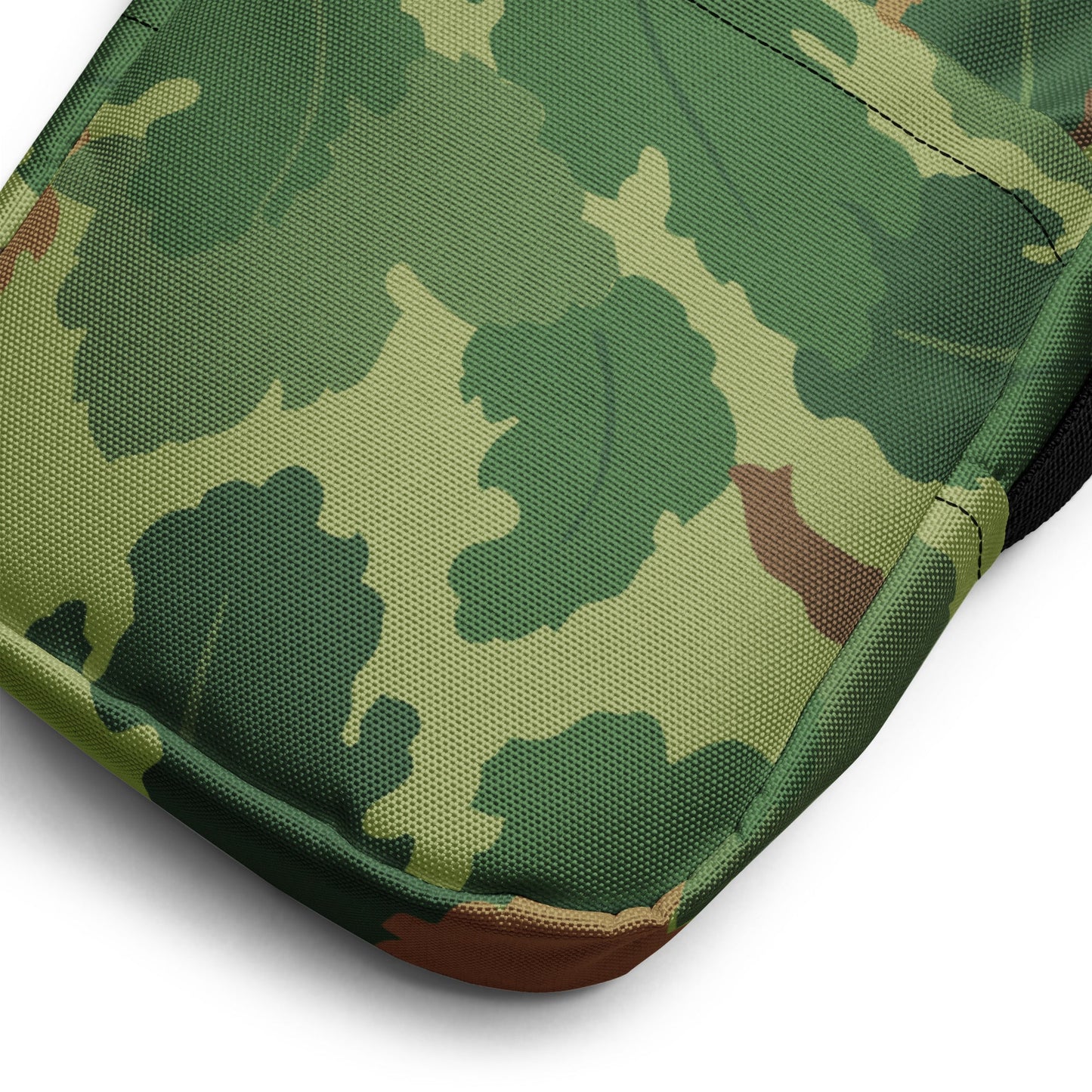
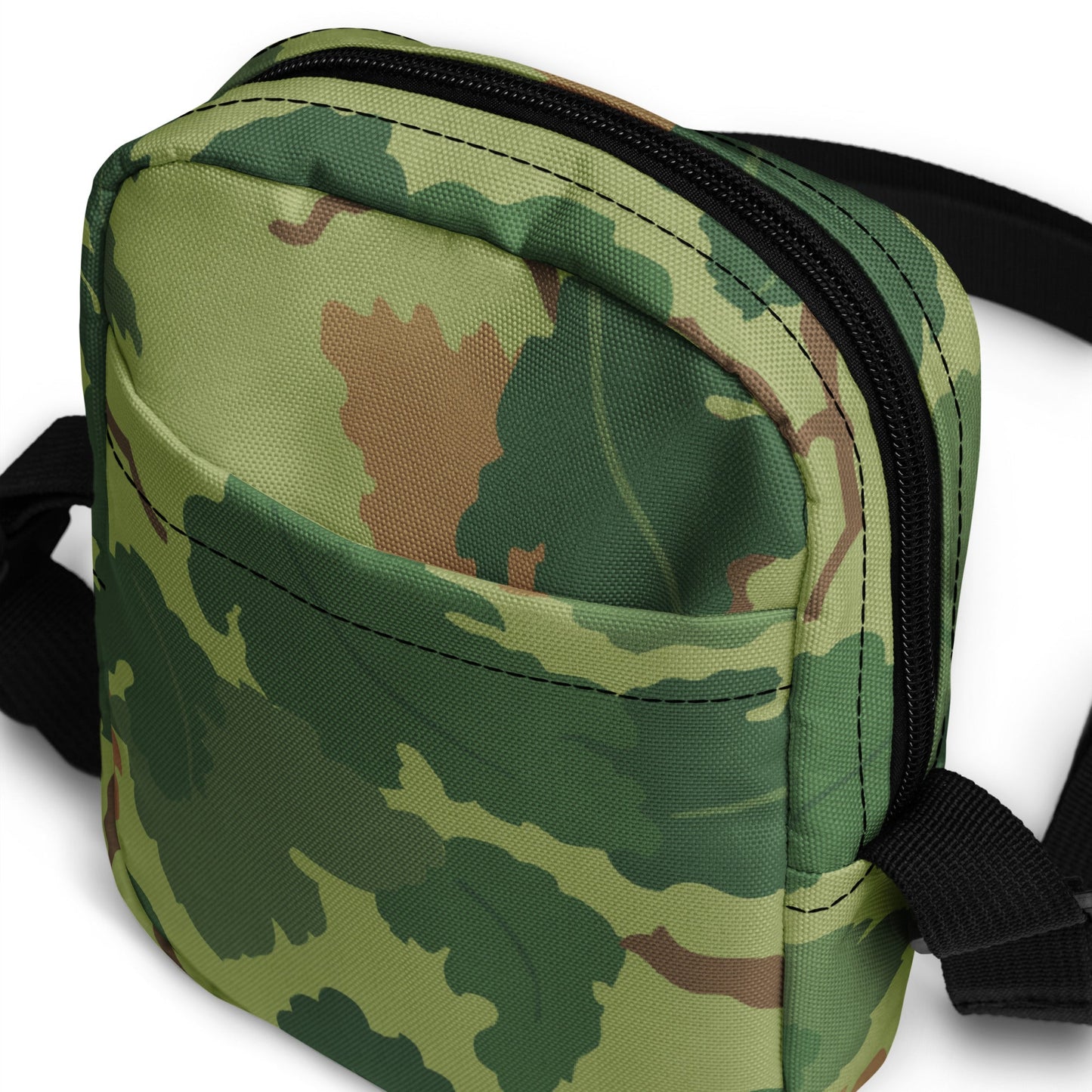
Mitchell Camo Crossbody Bag
Couldn't load pickup availability
Mitchell camouflage was designed by Meldon Mitchell in the 1940s and adopted by the U.S. Army as one of its first official disruptive patterns. It uses a two-layer print — a base of irregular brown and green shapes with a black overprint of fine branching lines — creating a pattern with more depth than single-layer prints at the same scale. The Mitchell pattern was used during the Korean War era and briefly in early Vietnam before Tiger Stripe and ERDL took precedence.
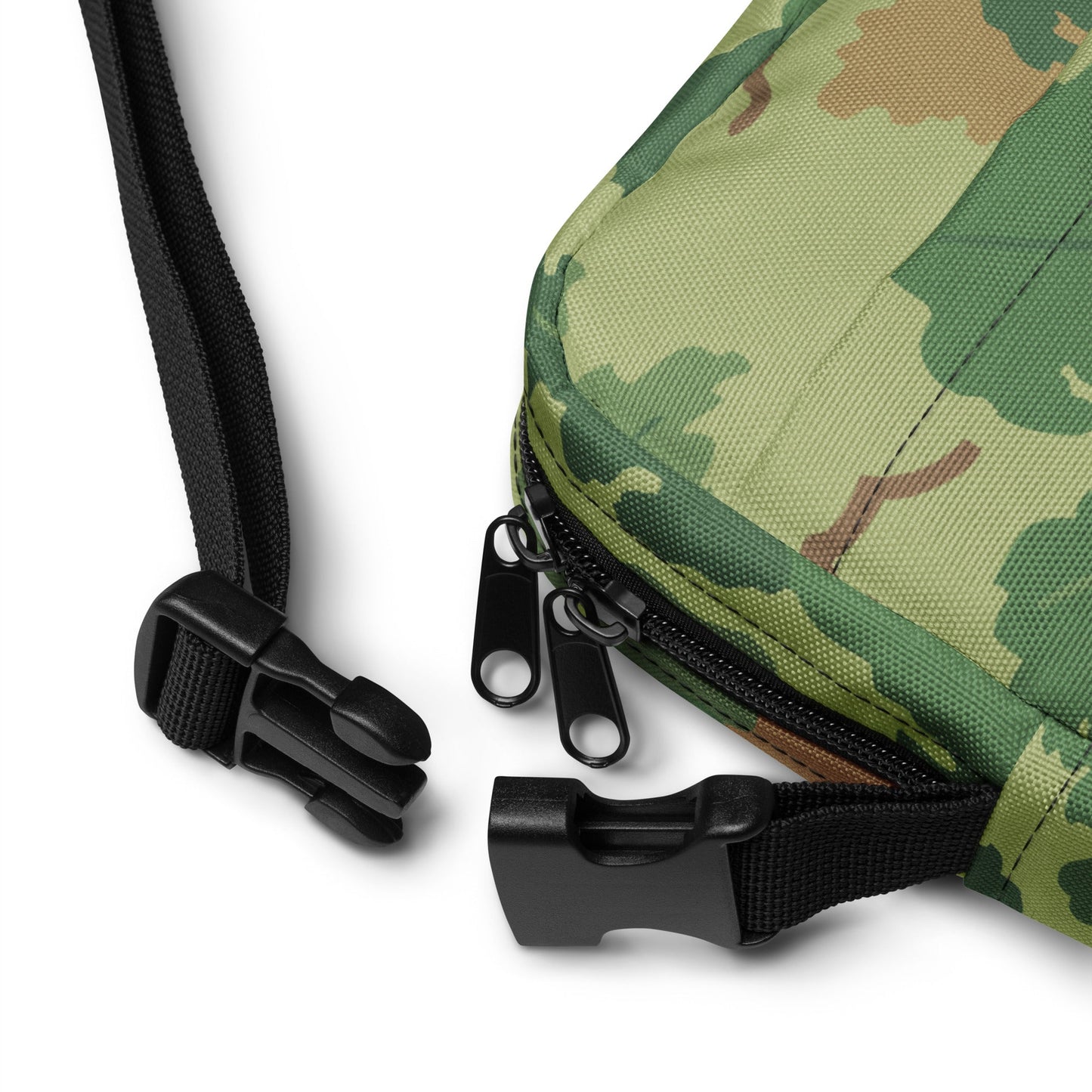
Vertical nylon crossbody with front zip pocket and adjustable strap. Dimensions: 4.7″ × 9″ × 2.4″.
- Mitchell Camo — 1940s U.S. two-layer disruptive pattern
- Vertical nylon, front zip pocket
- Adjustable shoulder strap
- 4.7″ × 9″ × 2.4″

In compliance with the General Product Safety Regulation (GPSR), Concealing Coloration and SINDEN VENTURES LIMITED ensure that all consumer products offered are safe and meet EU standards. For any product safety related inquiries or concerns, please contact our EU representative at gpsr@sindenventures.com.
You can also write to us at 2727 Steeles Ave West, Toronto, Canada, M3J 3G9 or Markou Evgenikou 11, Mesa Geitonia, 4002, Limassol, Cyprus.