Camouflage record
Mitchell
During WWII, the Marine Corps officially experimented with the M-42 Frog Skin battledress camouflage, while other U.S. troops, especially airborne pathfinders in Normandy, used hand-painted splotches, stripes, and foliage for camouflage. After the war, the US Military sought to develop a broader camouflage pattern. Between 1948 and 1953, field tests led to a trial in Panama of eight designs. Two complementary patterns emerged as effective: the green-hued Wine Leaf for spring and summer, and the brown Mitchell pattern for fall and winter, named after artist and former Marine Meldon Mitchell. This combination was implemented in the two-sided Pattern-53, with Mitchell becoming synonymous with both sides.
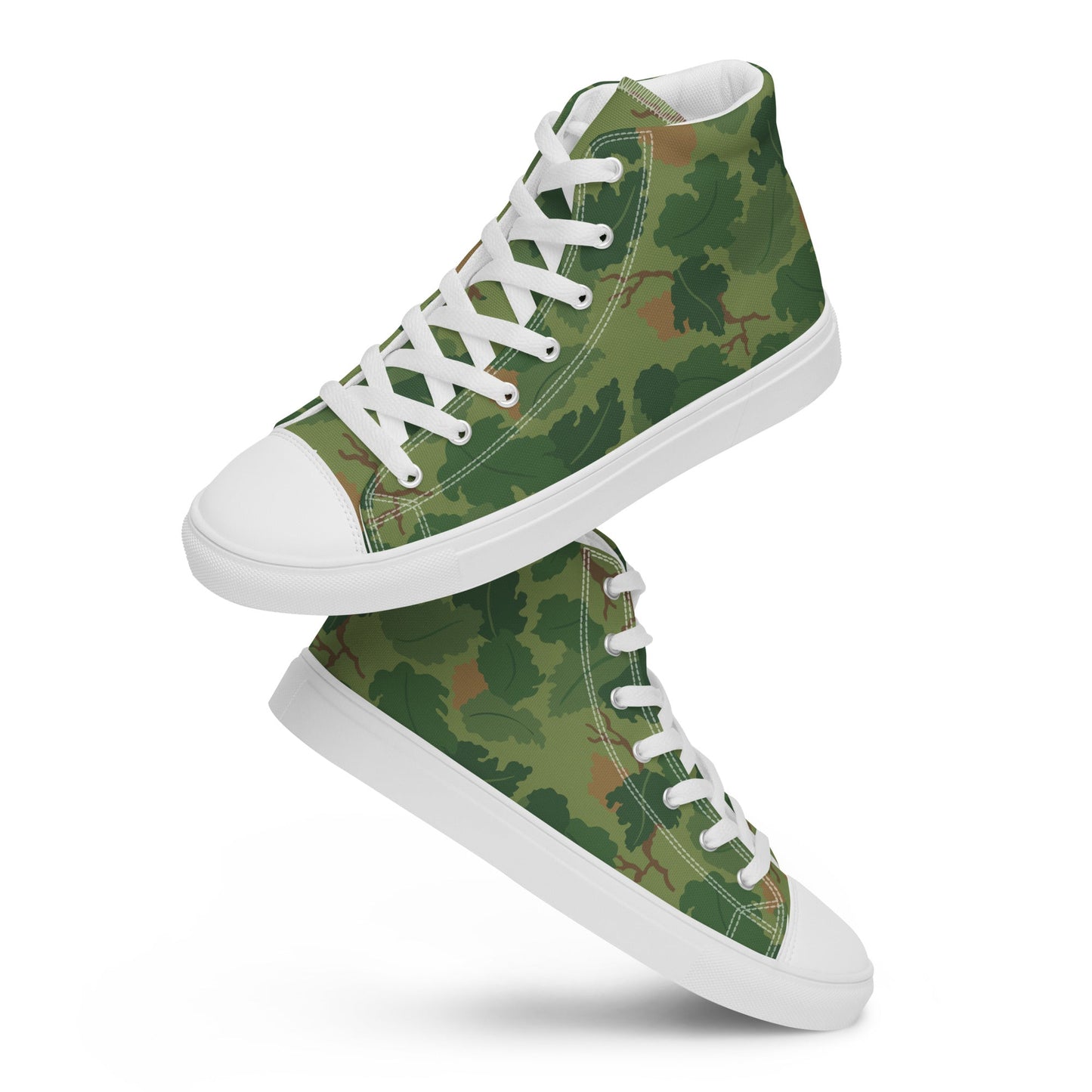
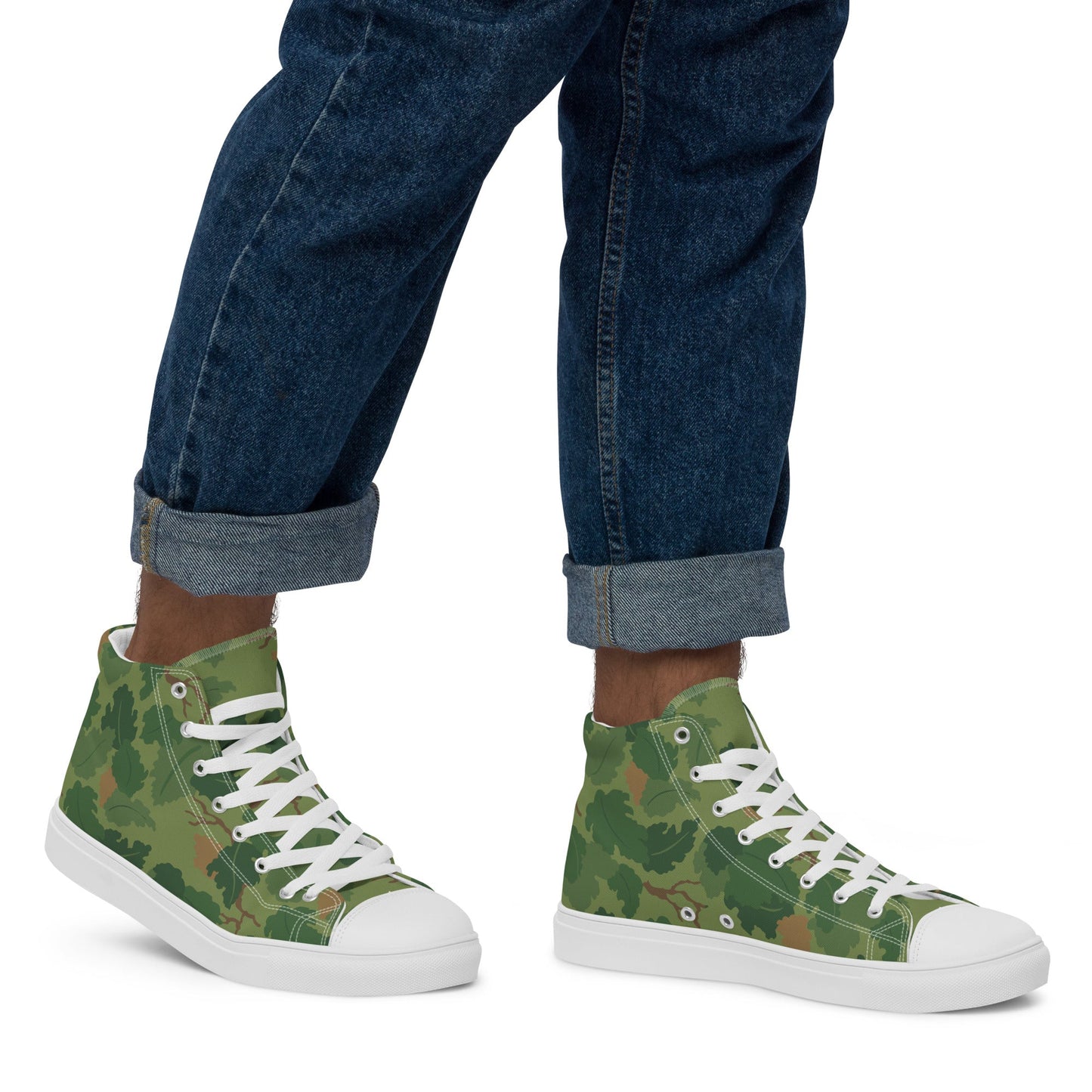
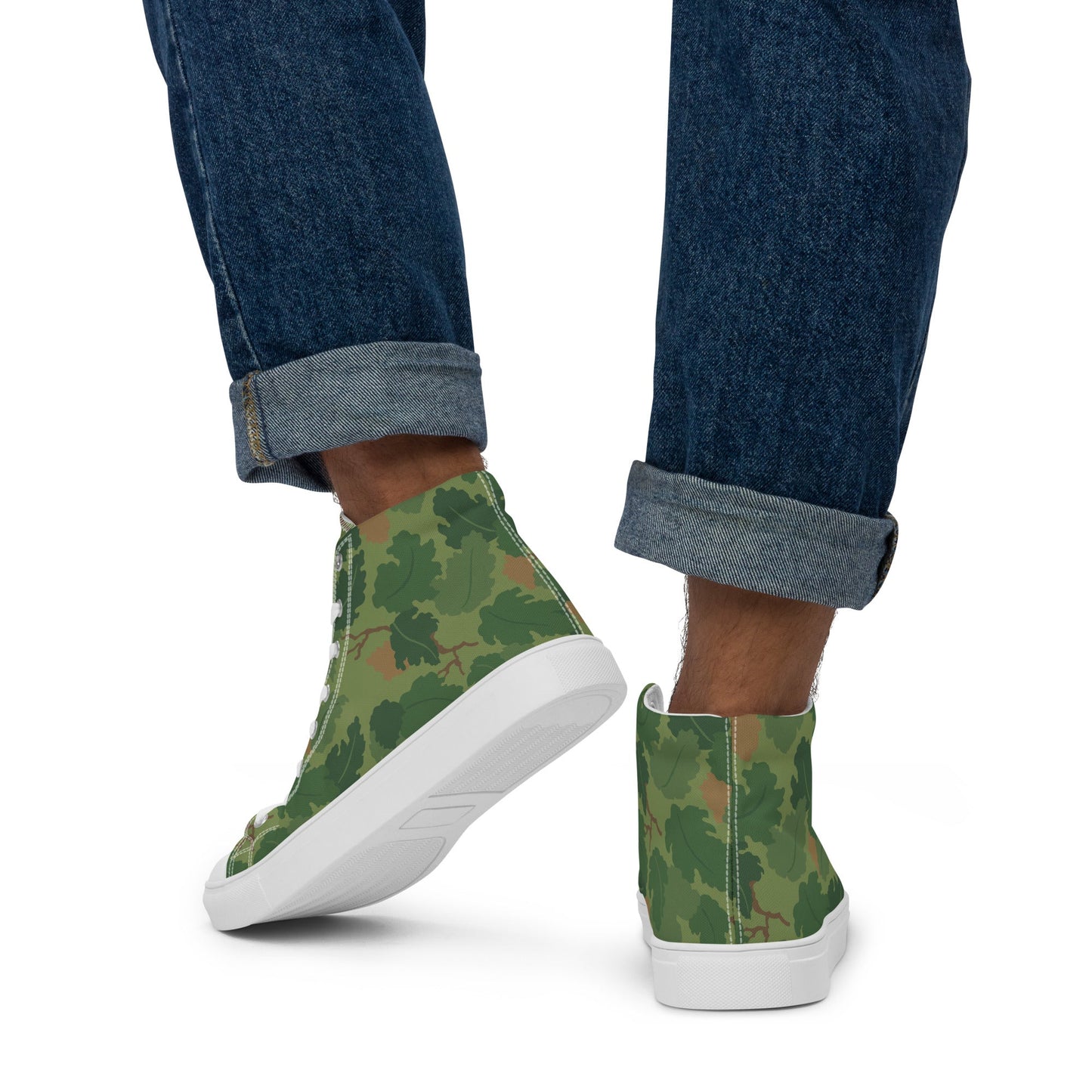
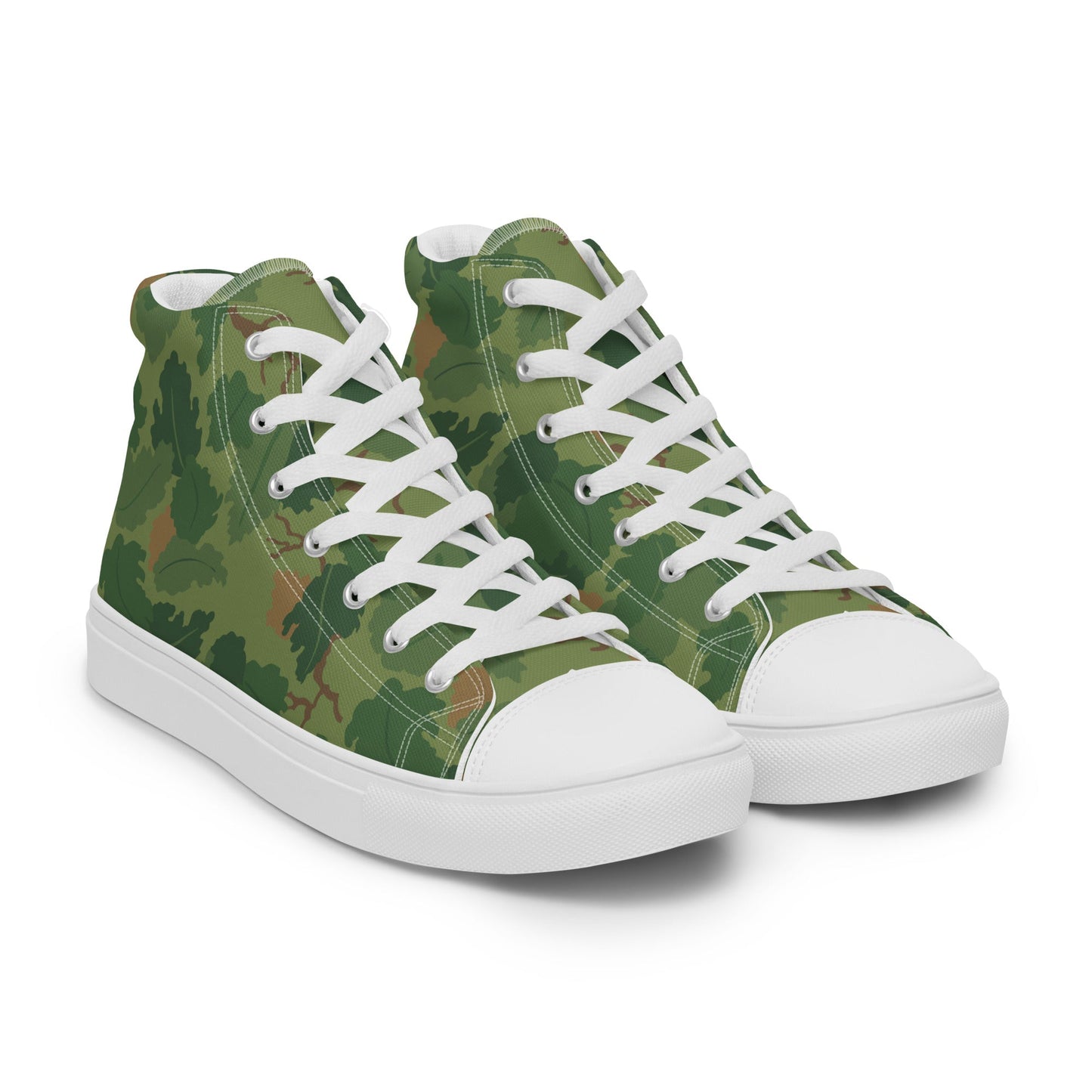
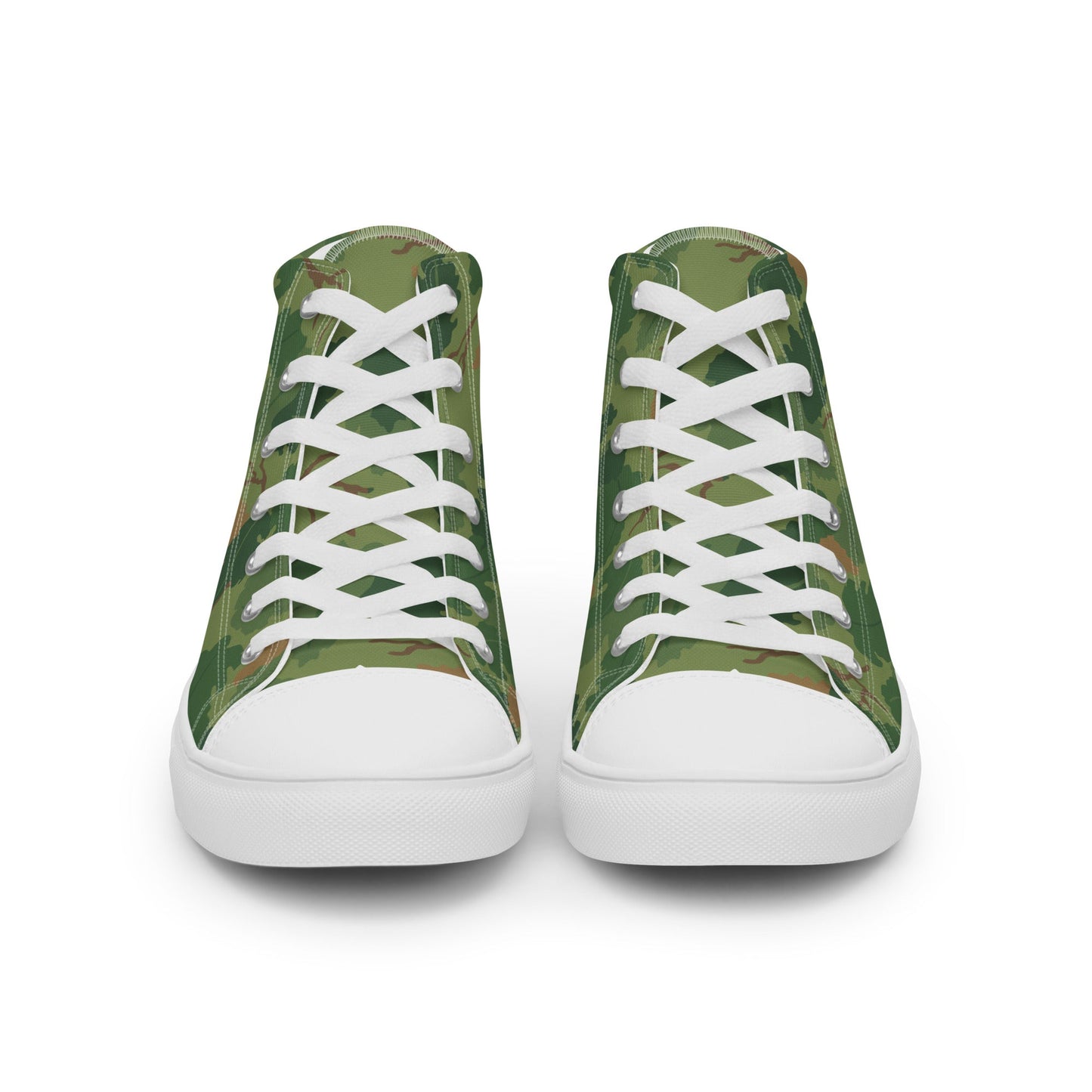
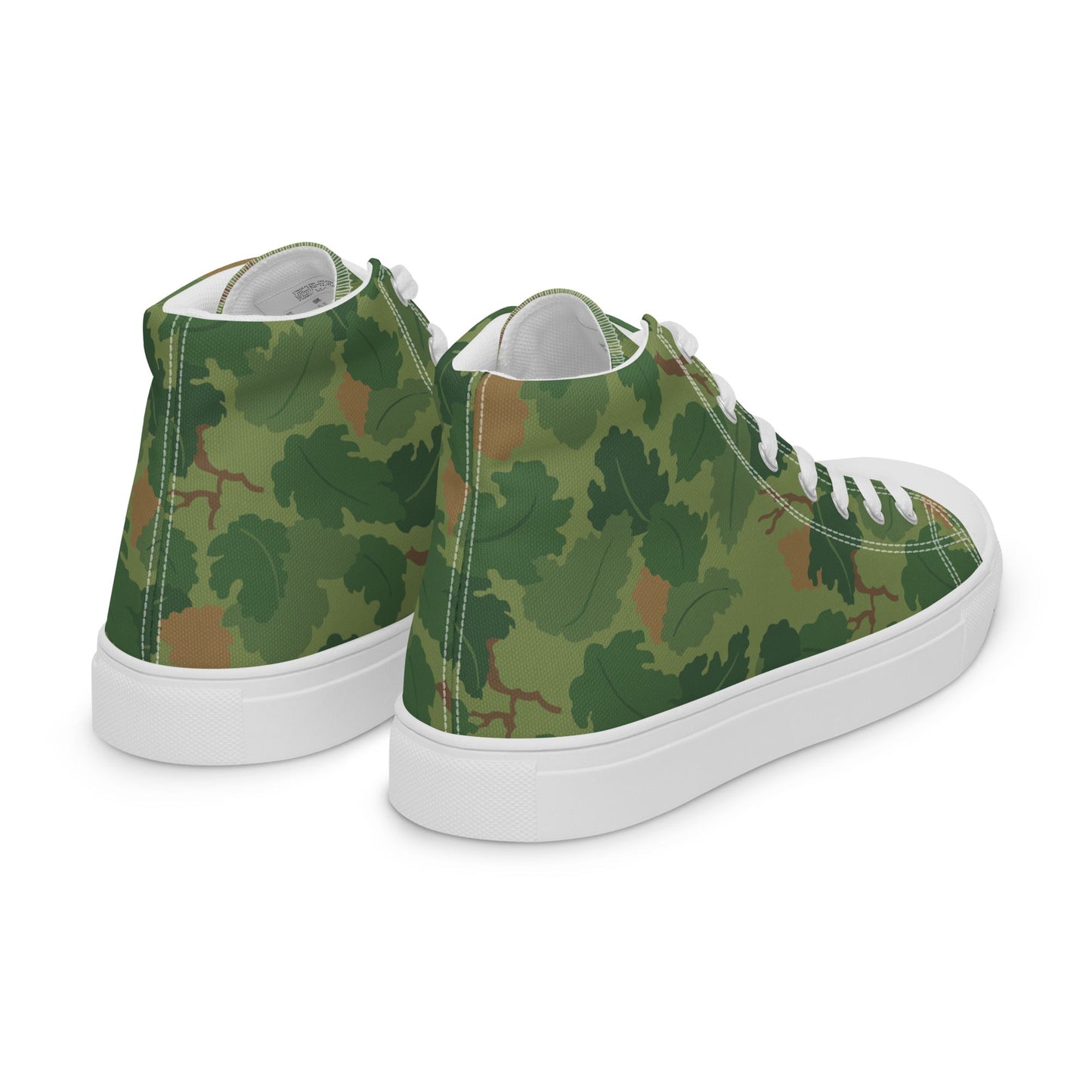
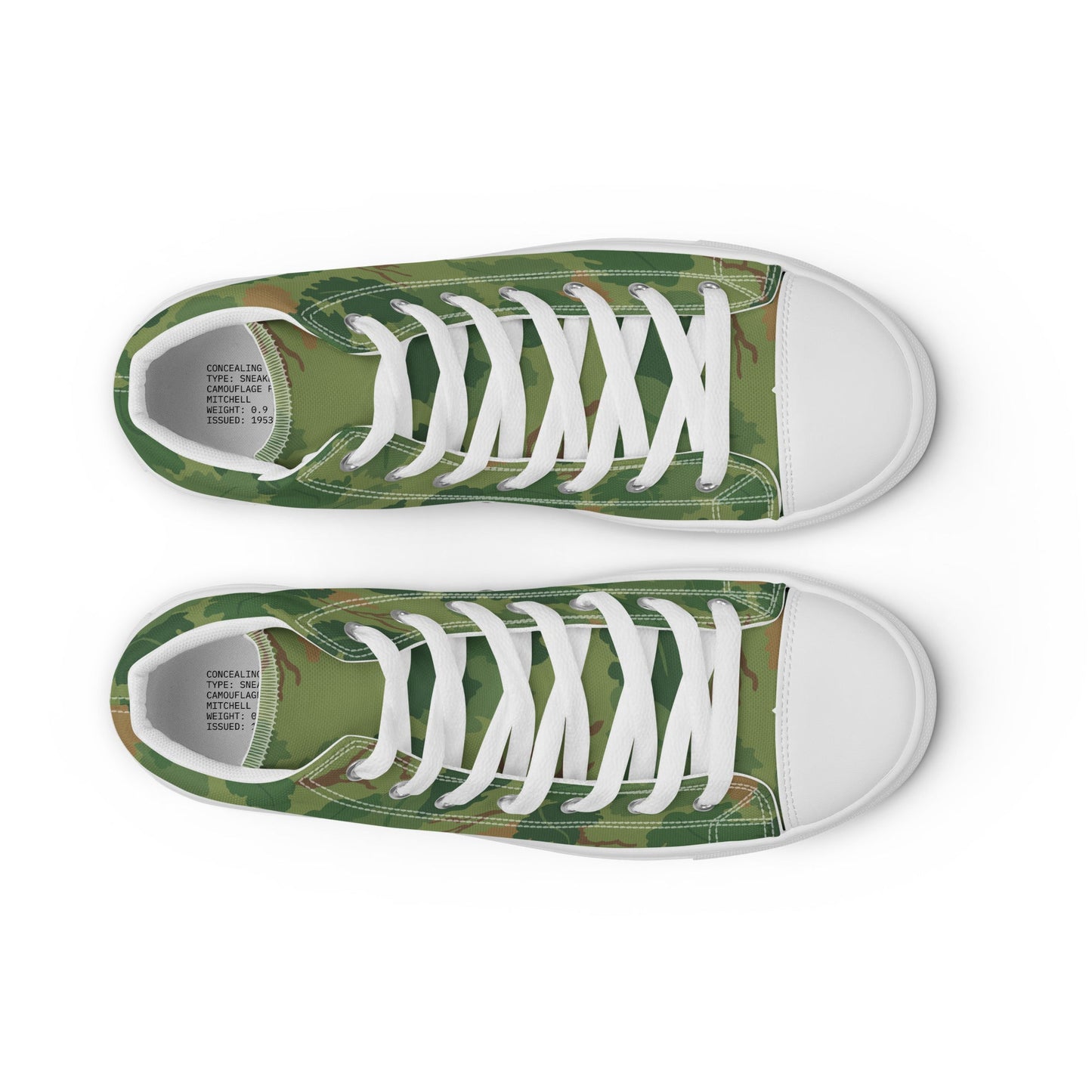
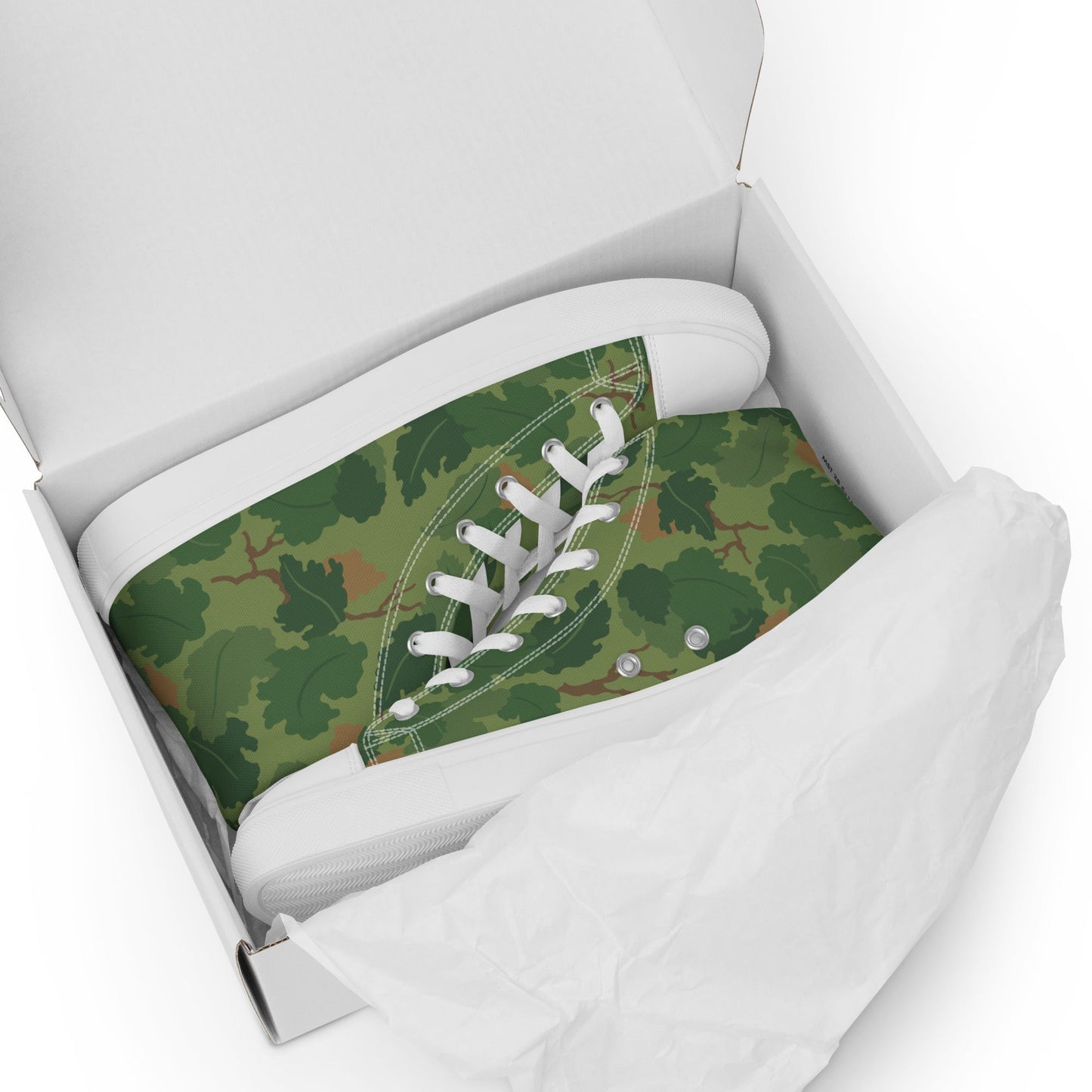
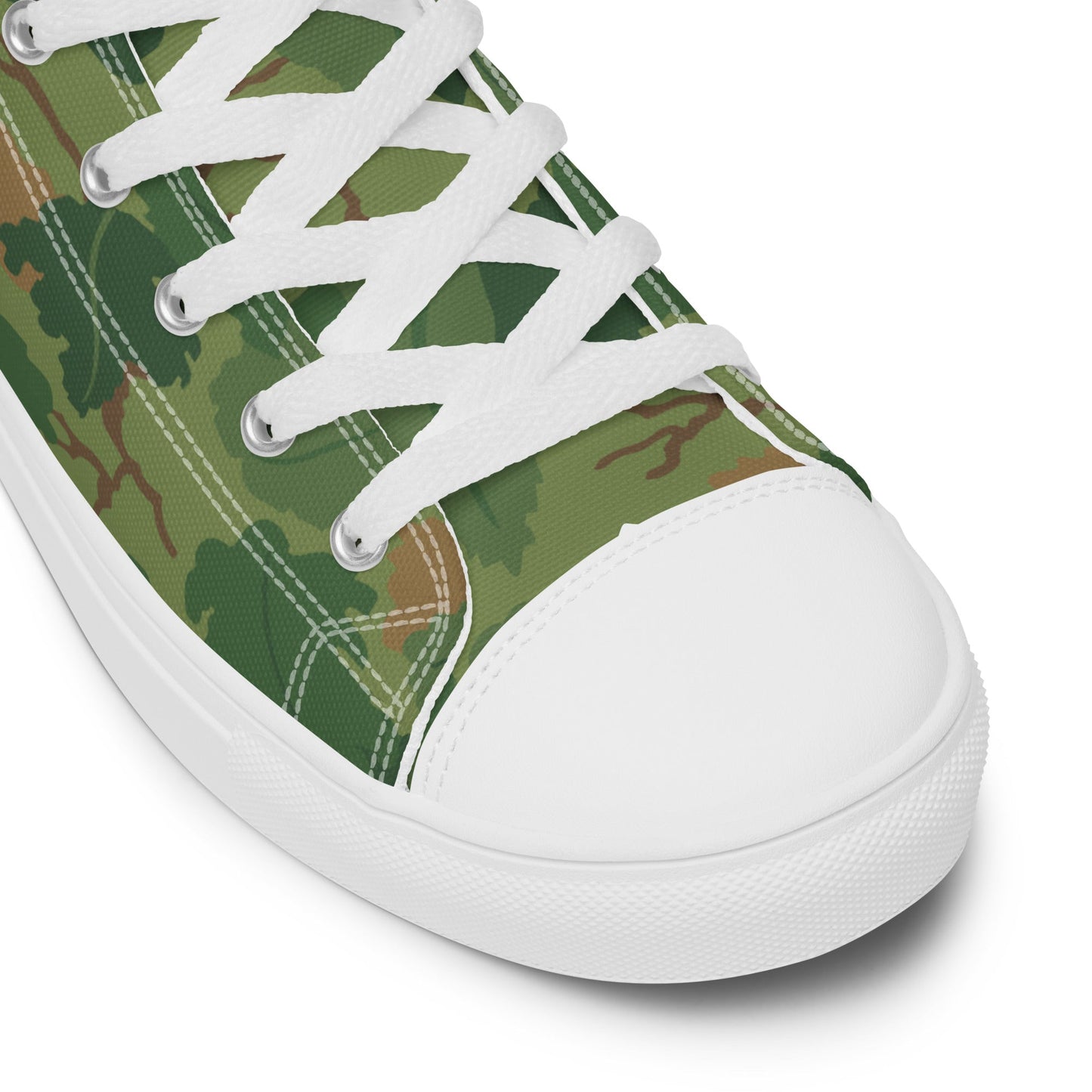
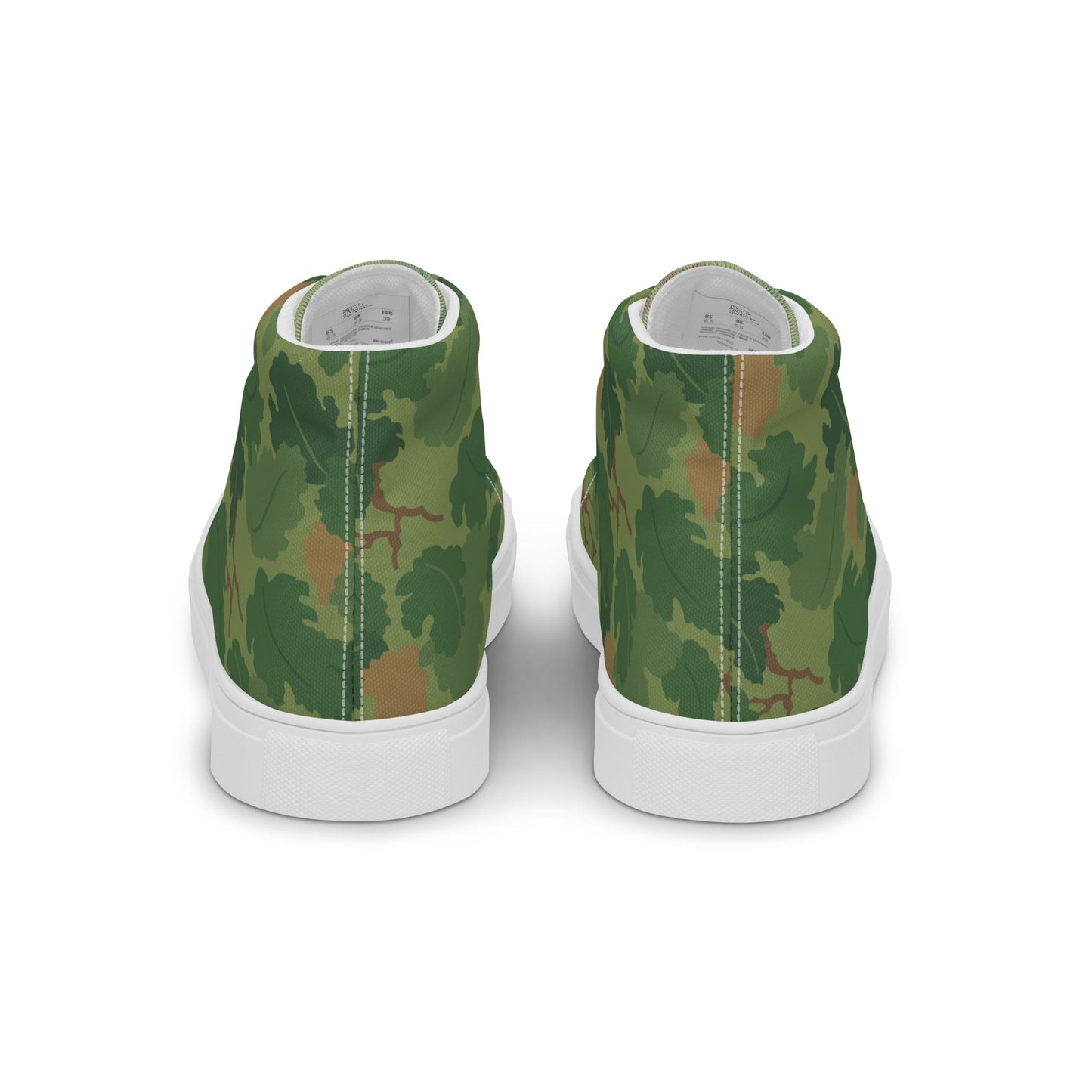
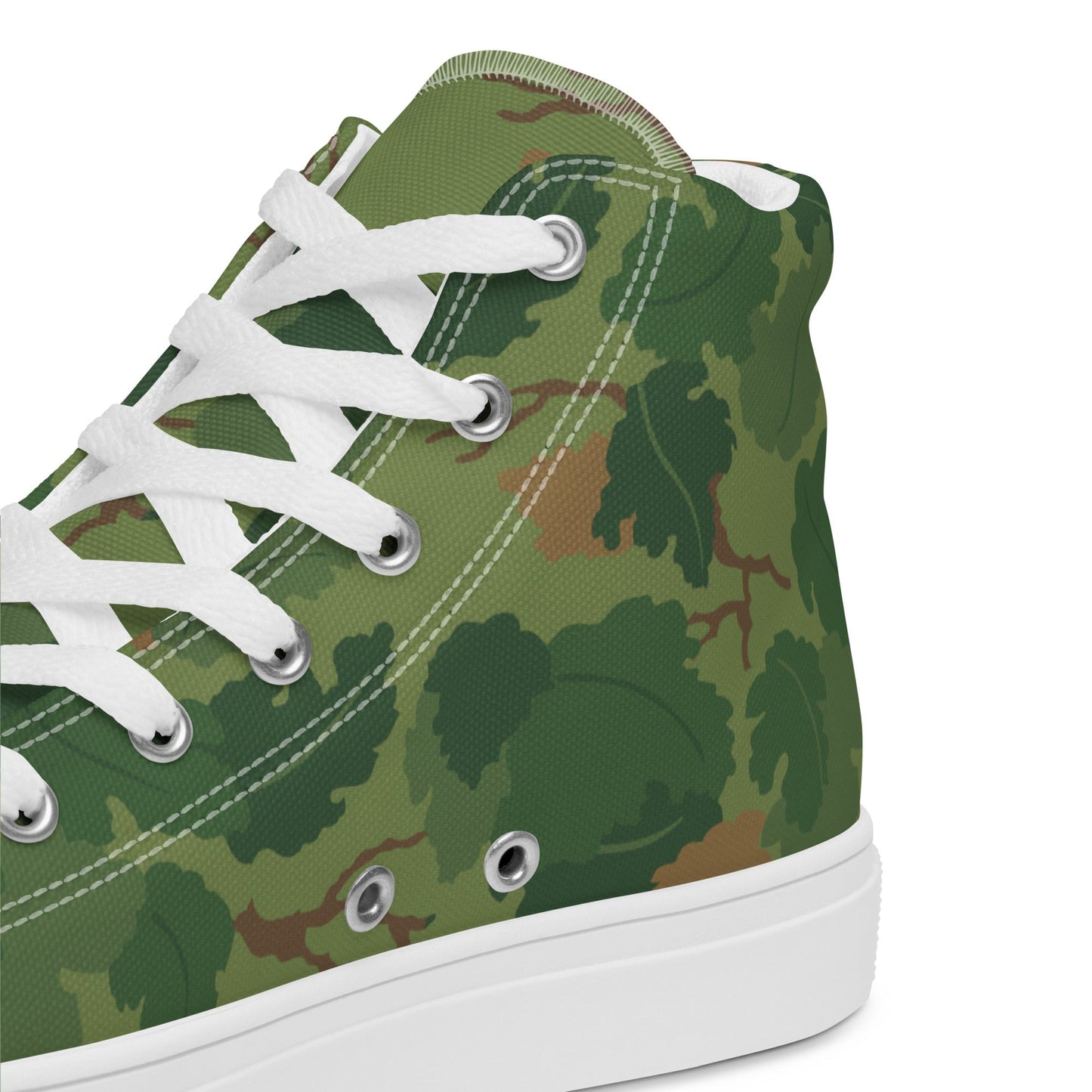
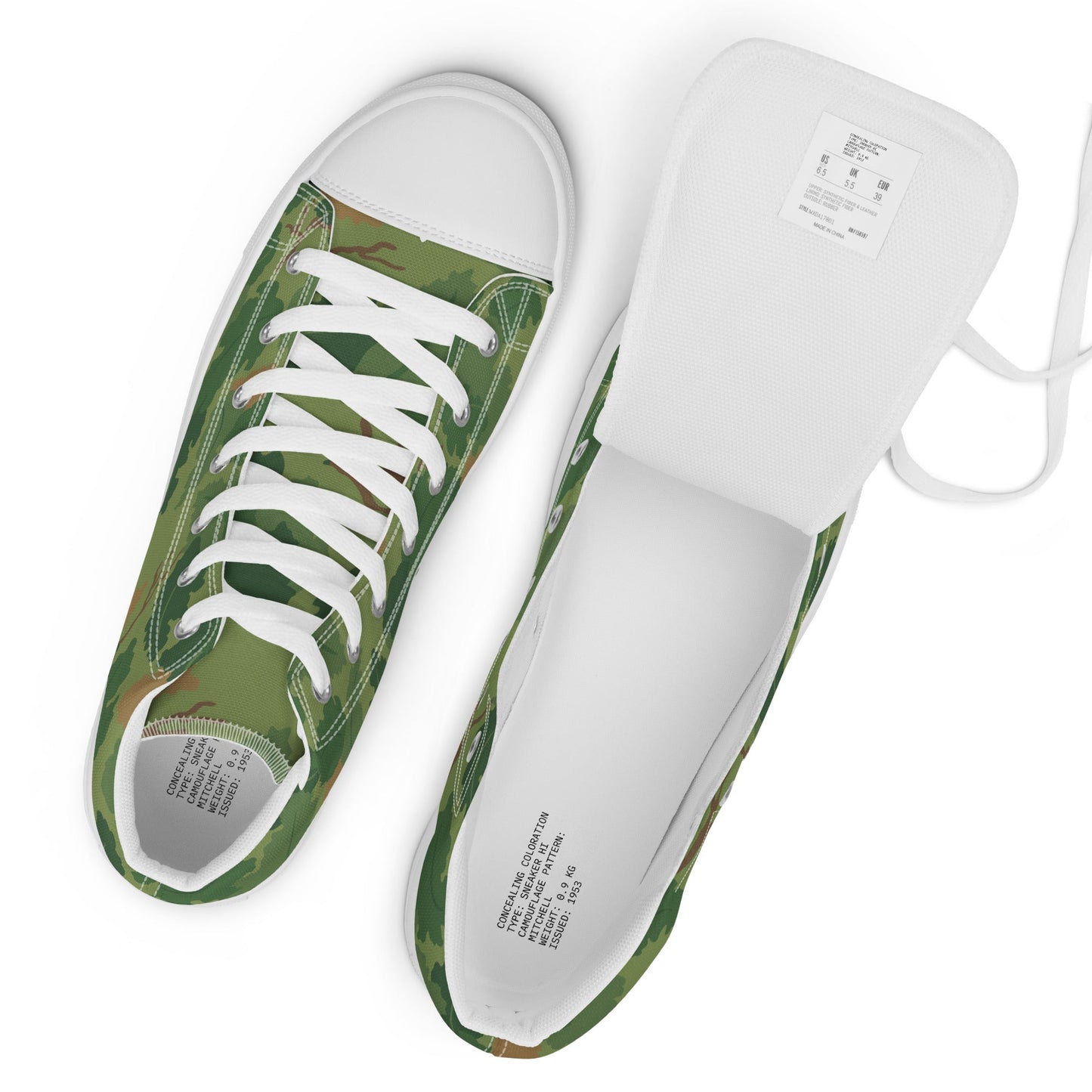
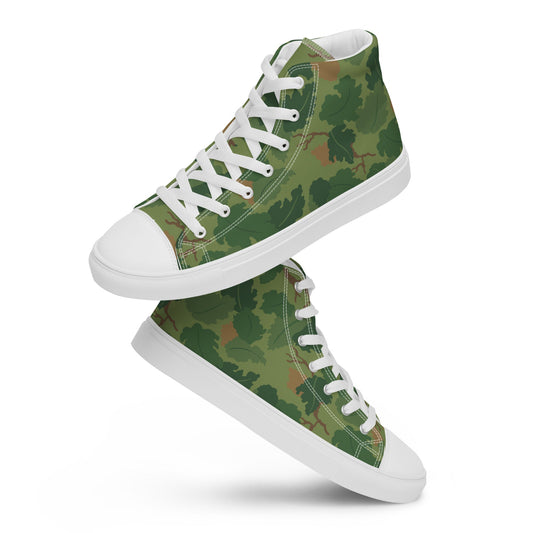
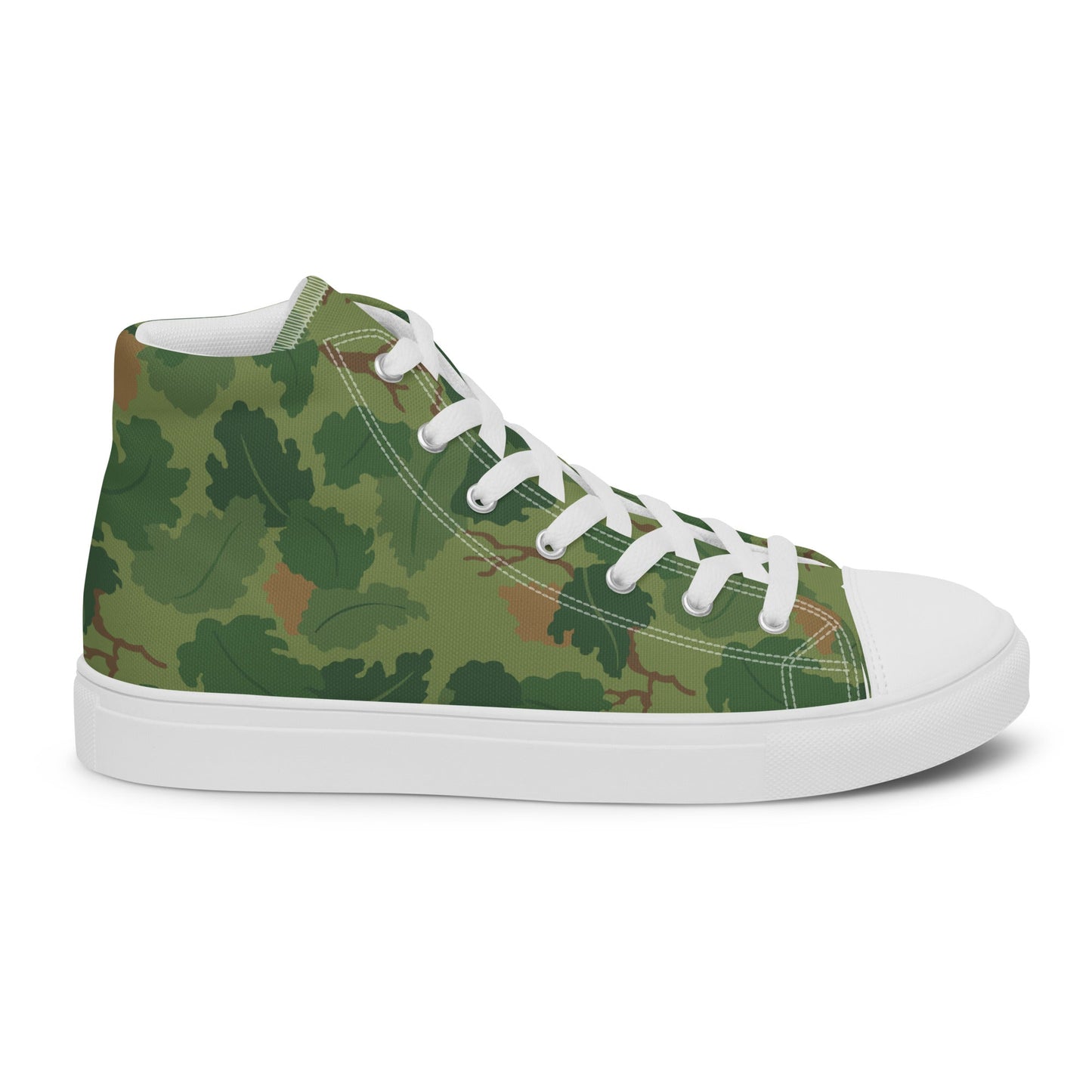
Mitchell Camo Men's Sneaker Hi
Shipping calculated at checkout
Couldn't load pickup availability
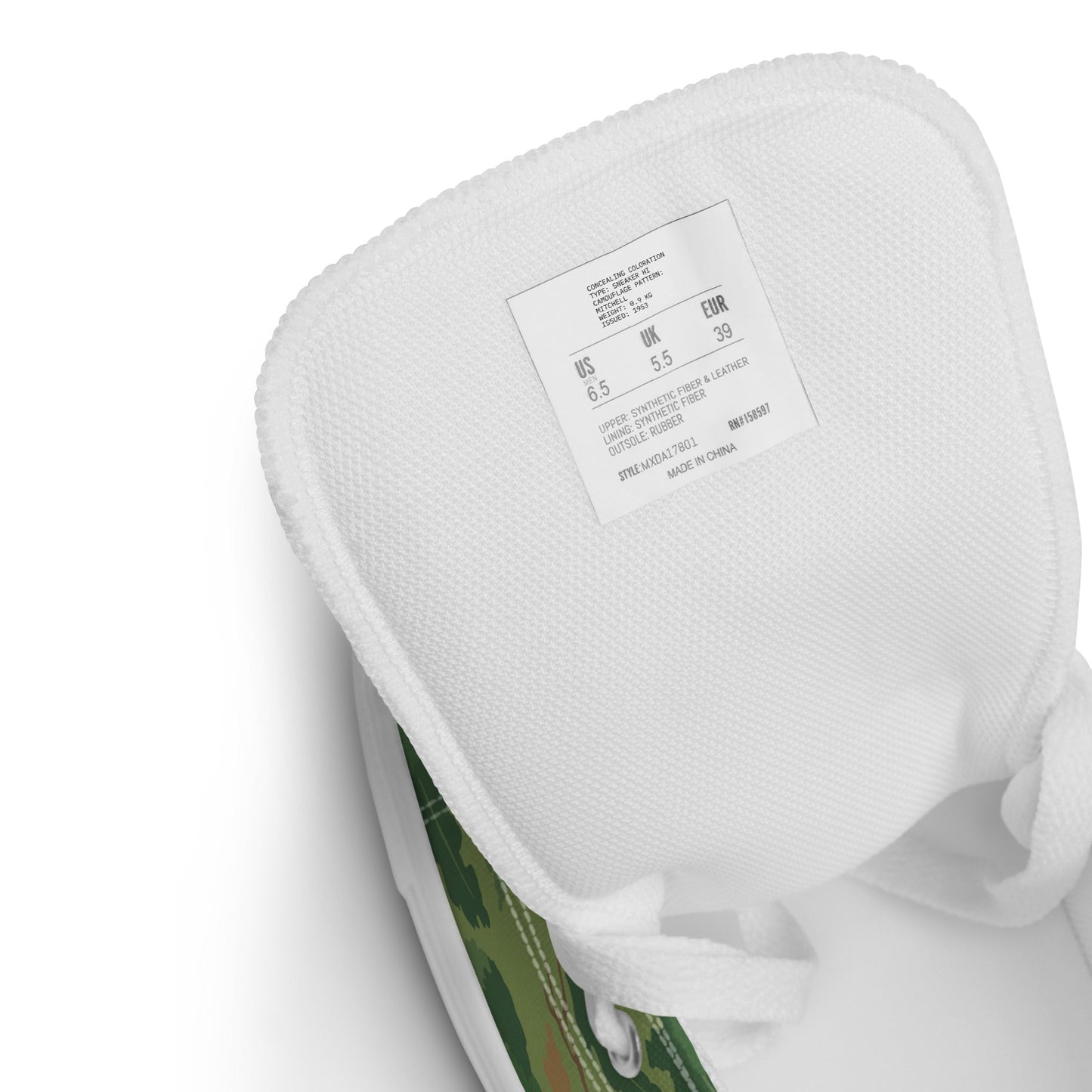
Mitchell camouflage was designed by Meldon Mitchell in the 1940s and adopted by the U.S. Army as one of its first official disruptive patterns. It uses a two-layer print construction: a base coat of irregular brown and green organic shapes with a second-pass black overprint of fine branch-like lines. The two-layer approach gives Mitchell more visual depth than single-layer patterns at the same print scale. On a canvas hi-top, both print layers stay legible.
Canvas upper, white rubber cupsole, vulcanized construction. Lace-up with brass eyelets. Men's sizes 7–13.
Specs
- Camouflage: Mitchell Camo — two-layer 1940s U.S. disruptive pattern
- Canvas upper, white rubber cupsole
- Lace-up with brass eyelets
- Men's sizes 7–13
Shipping & returns
Free US shipping on orders over $95. Shipping calculated at checkout. 30-day returns, with free return shipping in the US and Canada.
Camouflage record
Mitchell
During WWII, the Marine Corps officially experimented with the M-42 Frog Skin battledress camouflage, while other U.S. troops, especially airborne pathfinders in Normandy, used hand-painted splotches, stripes, and foliage for camouflage. After the war, the US Military sought to develop a broader camouflage pattern. Between 1948 and 1953, field tests led to a trial in Panama of eight designs. Two complementary patterns emerged as effective: the green-hued Wine Leaf for spring and summer, and the brown Mitchell pattern for fall and winter, named after artist and former Marine Meldon Mitchell. This combination was implemented in the two-sided Pattern-53, with Mitchell becoming synonymous with both sides.