

Pietruszka · Dog Collar & Leash Set
Pietruszka Camo Dog Collar & Leash Set
Pietruszka Camo Dog Collar & Leash Set
Regular price
$35.00 USD
Regular price
Sale price
$35.00 USD
Unit price
per
Shipping calculated at checkout.
Shipping calculated at checkout
Couldn't load pickup availability
Free 30-day returns · US & Canada
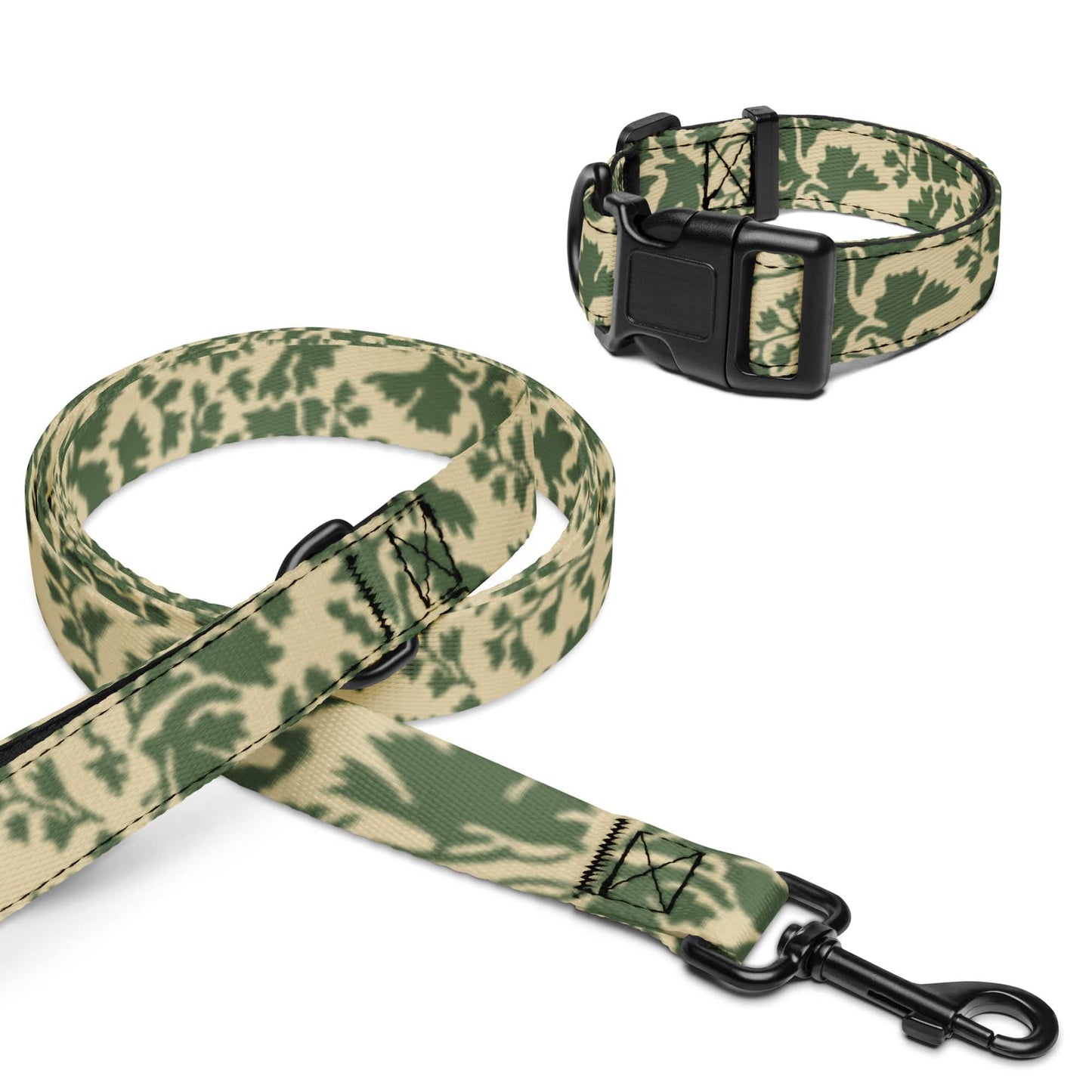
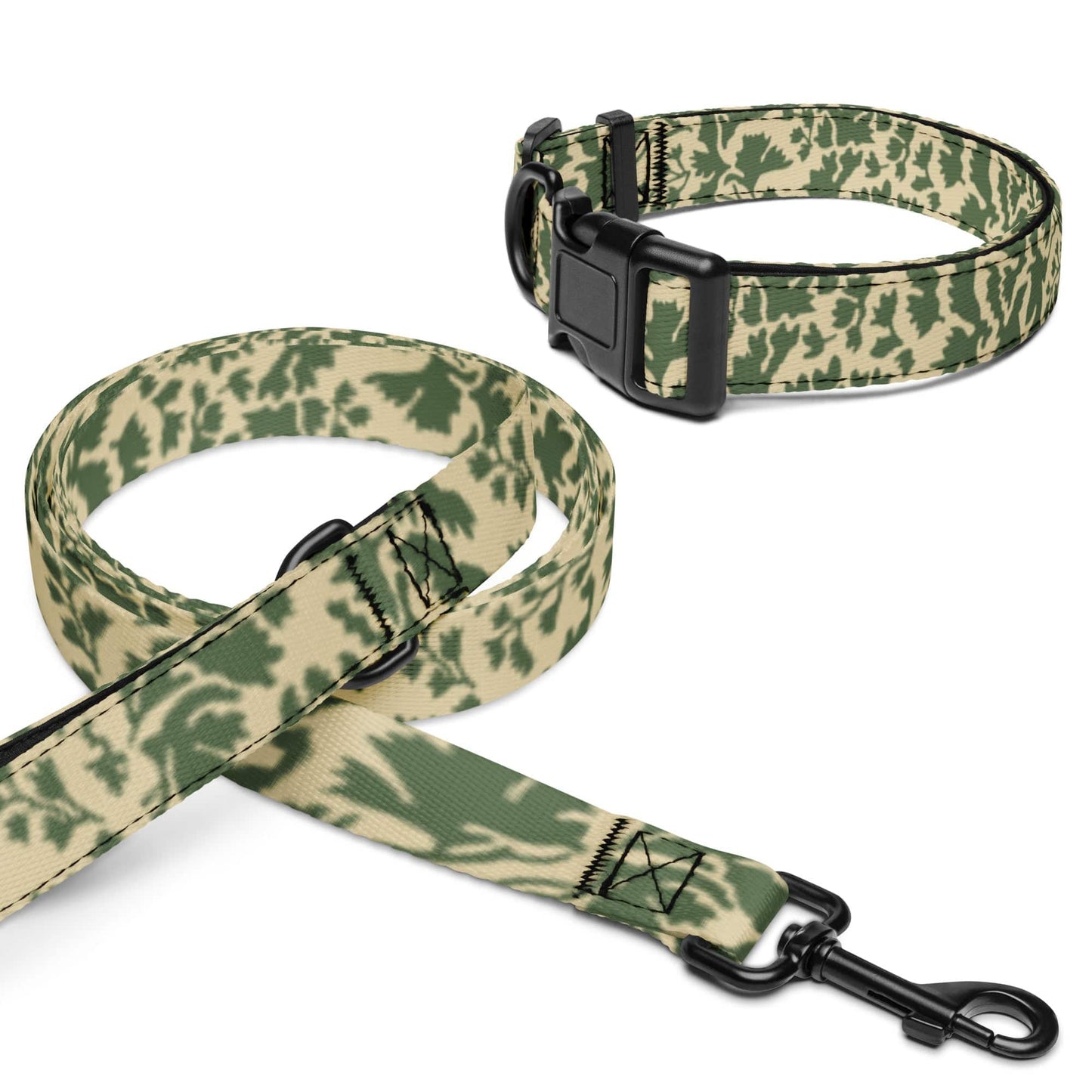
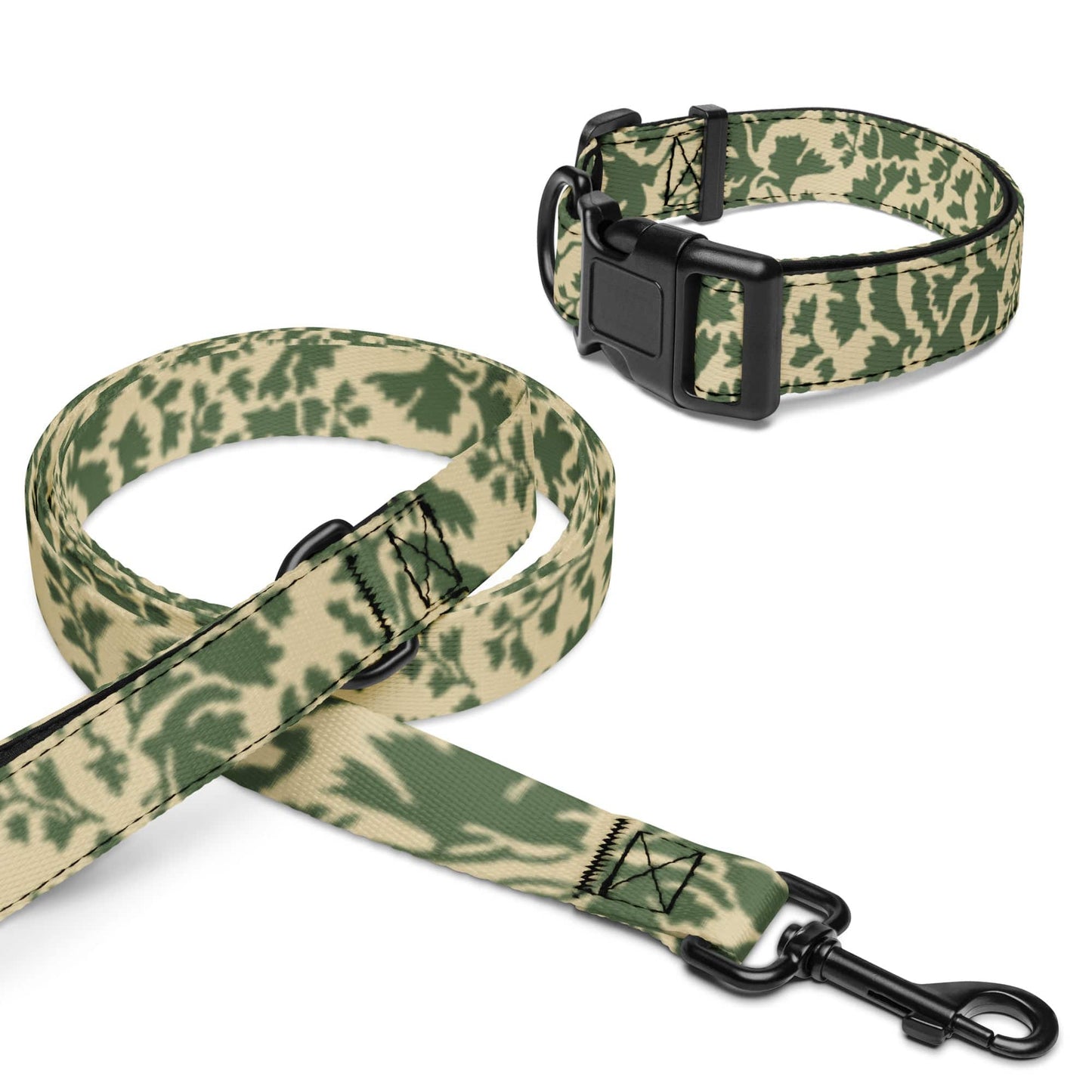
Pietruszka “Parsley” — Poland's first official military camouflage, adopted in 1952 — is printed across matched nylon collar and 5-foot leash. The foliage scatter of olive, tan, and dark green shapes that defined the pattern for four decades of Polish Army service reads cleanly on the woven nylon of both pieces, maintaining its warm olive-green character across the full hardware set. Sold as a matched set.
Adjustable nylon collar, quick-release buckle, sizes S/M/L. 5ft leash, padded hand loop. Matched set.
Specs
Shipping & returns
Free US shipping on orders over $95. Shipping calculated at checkout. 30-day returns, with free return shipping in the US and Canada.

Customer Reviews
Be the first to write a review
0%
(0)
0%
(0)
0%
(0)
0%
(0)
0%
(0)

Pietruszka Camo Dog Collar & Leash Set
Regular price
$35.00 USD
Regular price
Sale price
$35.00 USD
Unit price
per