


01 / 09

Pietruszka Camo Women's Slip-On Sneaker
Pietruszka Camo Women's Slip-On Sneaker
Regular price
$41.95 USD
Regular price
$49.95 USD
Sale price
$41.95 USD
Unit price
per
Shipping calculated at checkout.
Shipping calculated at checkout
Couldn't load pickup availability
Free 30-day returns · US & Canada
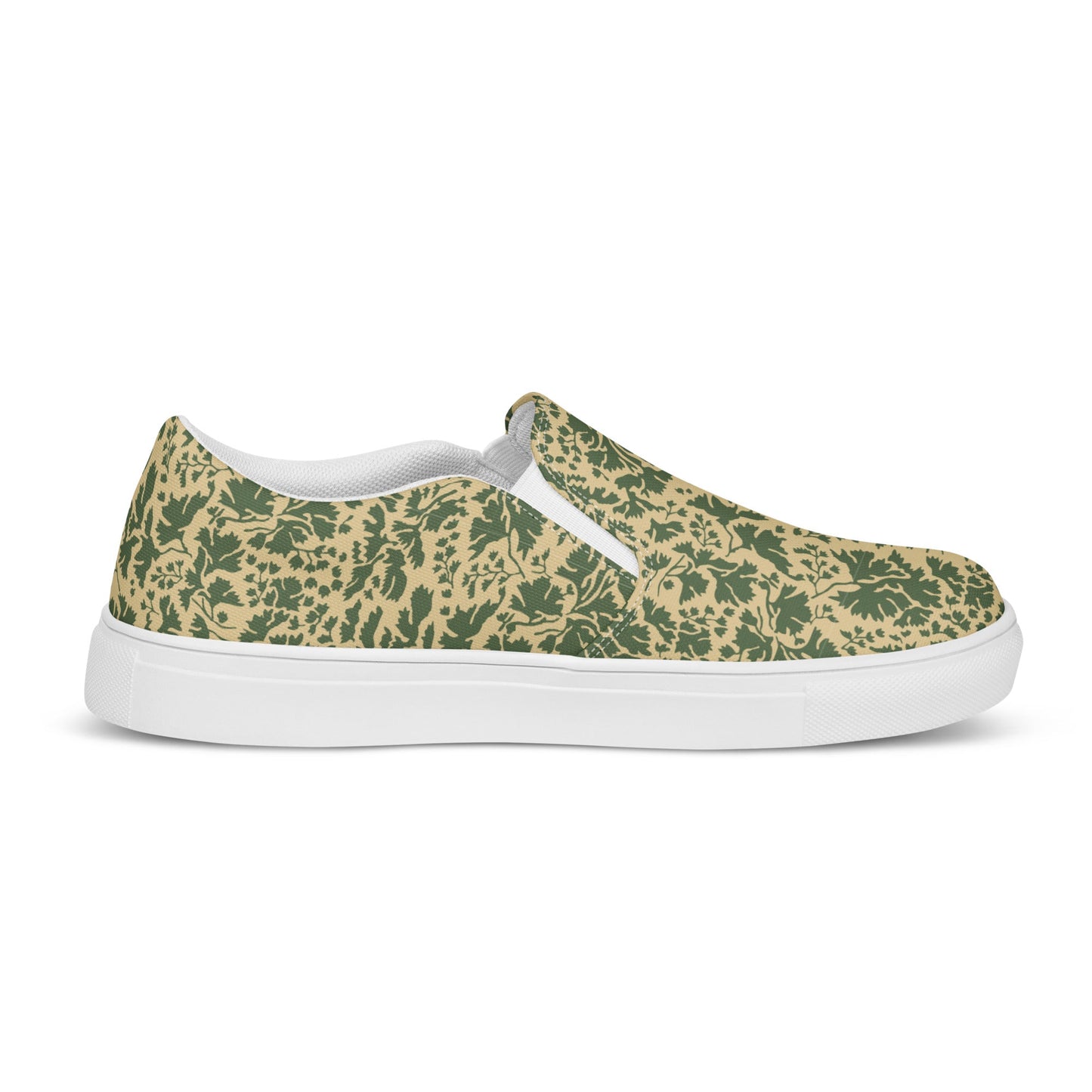
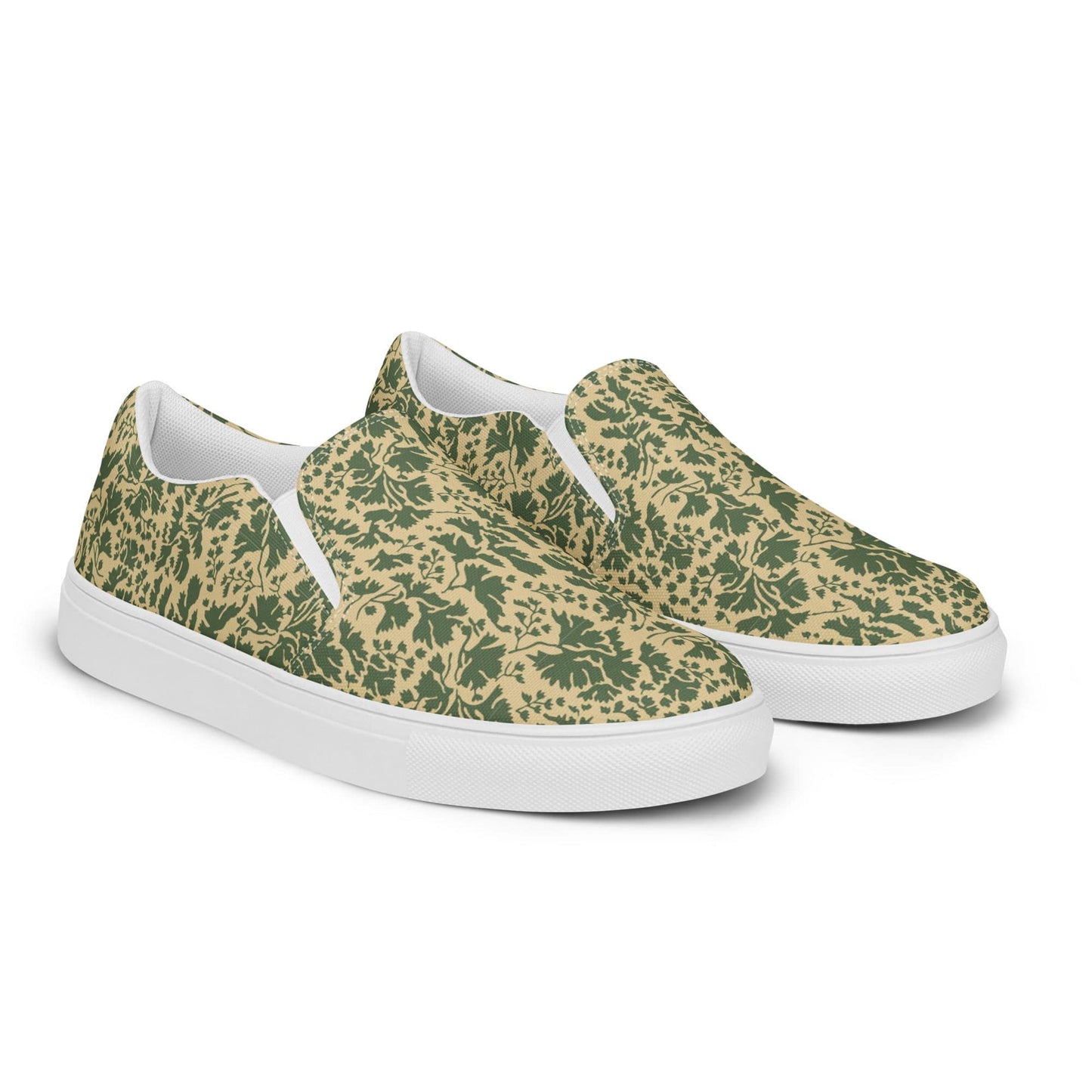
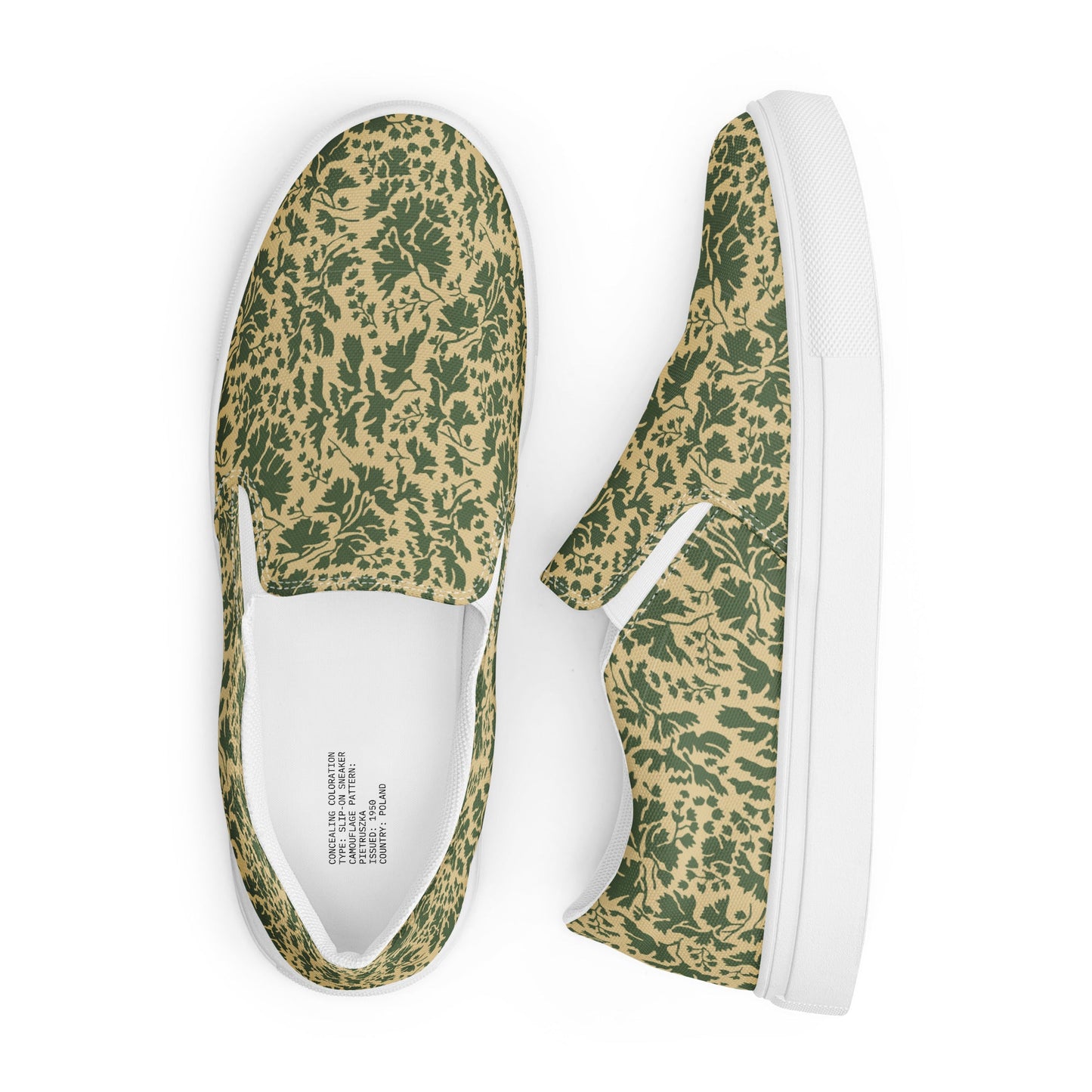
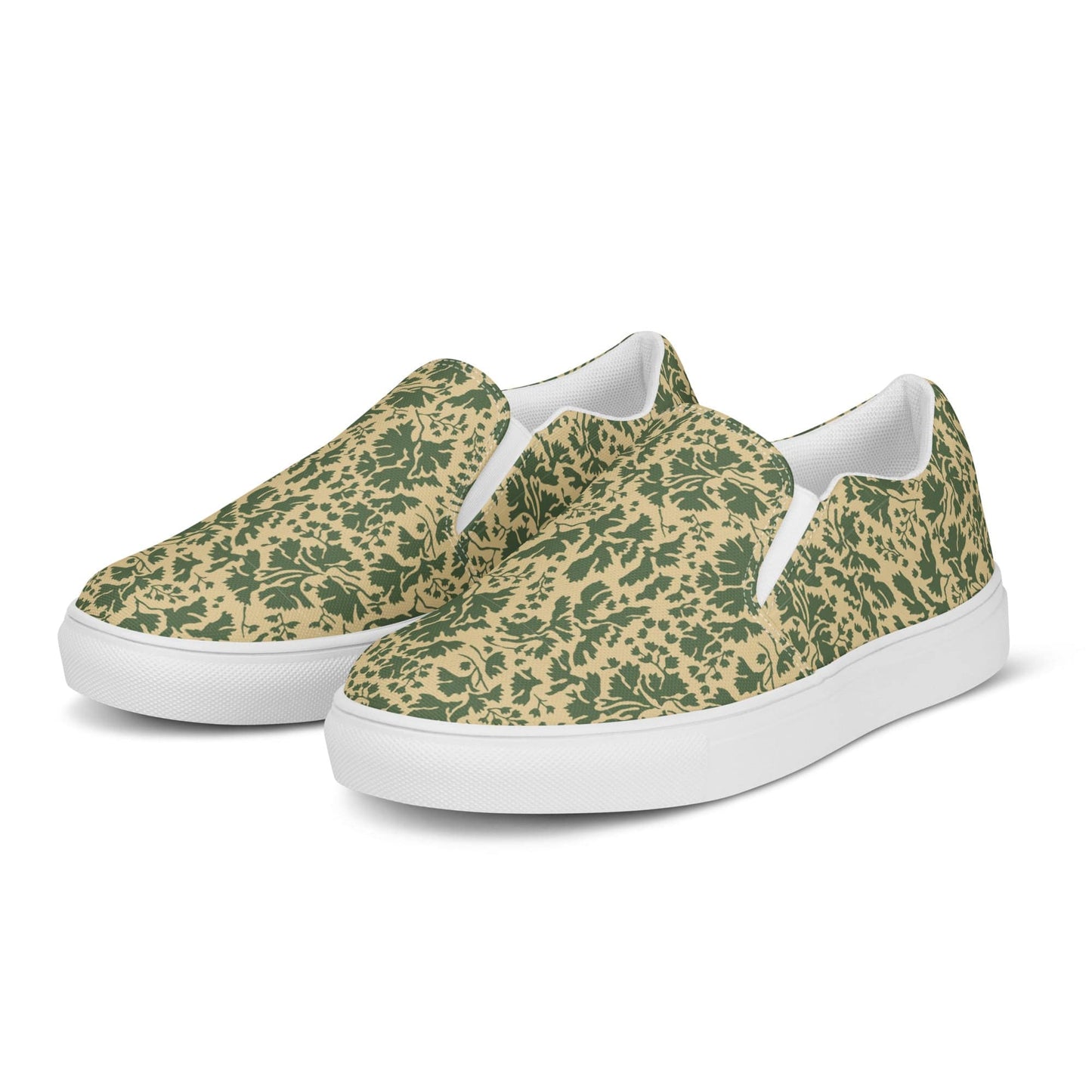
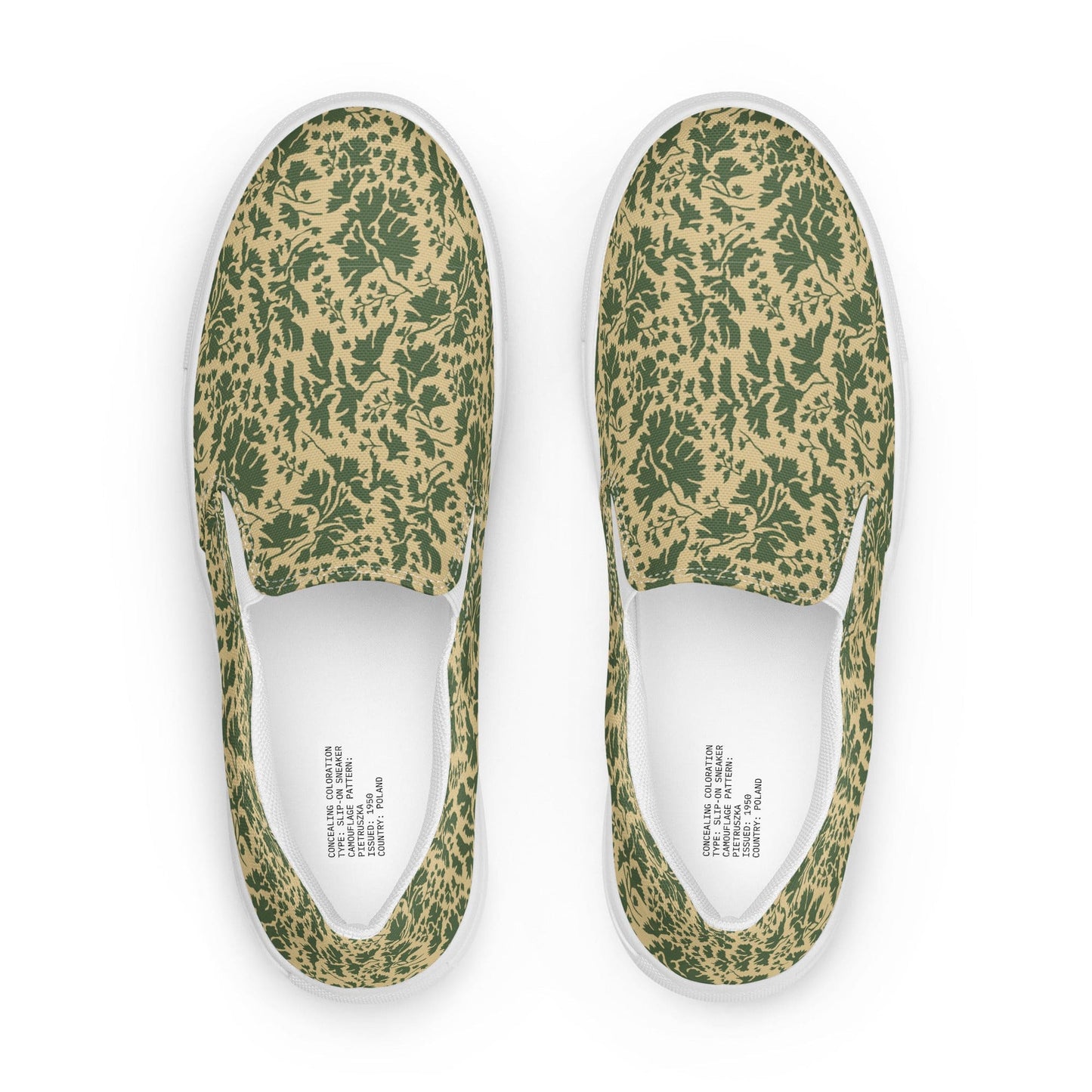
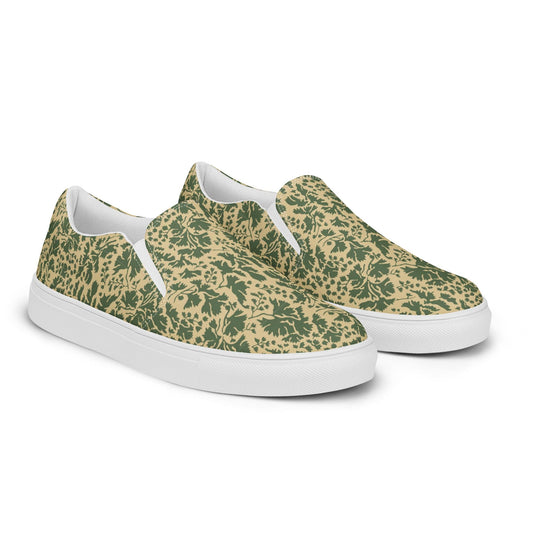
The Pietruszka “Parsley” camouflage — developed for the Polish Armed Forces in the early 1950s, a foliage scatter of olive, tan, and dark green shapes referencing Central European woodland — prints at full scale across the toe box and vamp of a women's slip-on. The canvas upper with elastic side gore allows easy entry without interrupting the continuous print.
Canvas upper with elastic side gore, rubber cupsole, vulcanized construction. Women's sizes 5–12. See also the Pietruszka Women's Sneaker Hi for the lace-up version.
Specs
Shipping & returns
Free US shipping on orders over $95. Shipping calculated at checkout. 30-day returns, with free return shipping in the US and Canada.




Customer Reviews
Be the first to write a review
0%
(0)
0%
(0)
0%
(0)
0%
(0)
0%
(0)

Pietruszka Camo Women's Slip-On Sneaker
Regular price
$41.95 USD
Regular price
$49.95 USD
Sale price
$41.95 USD
Unit price
per