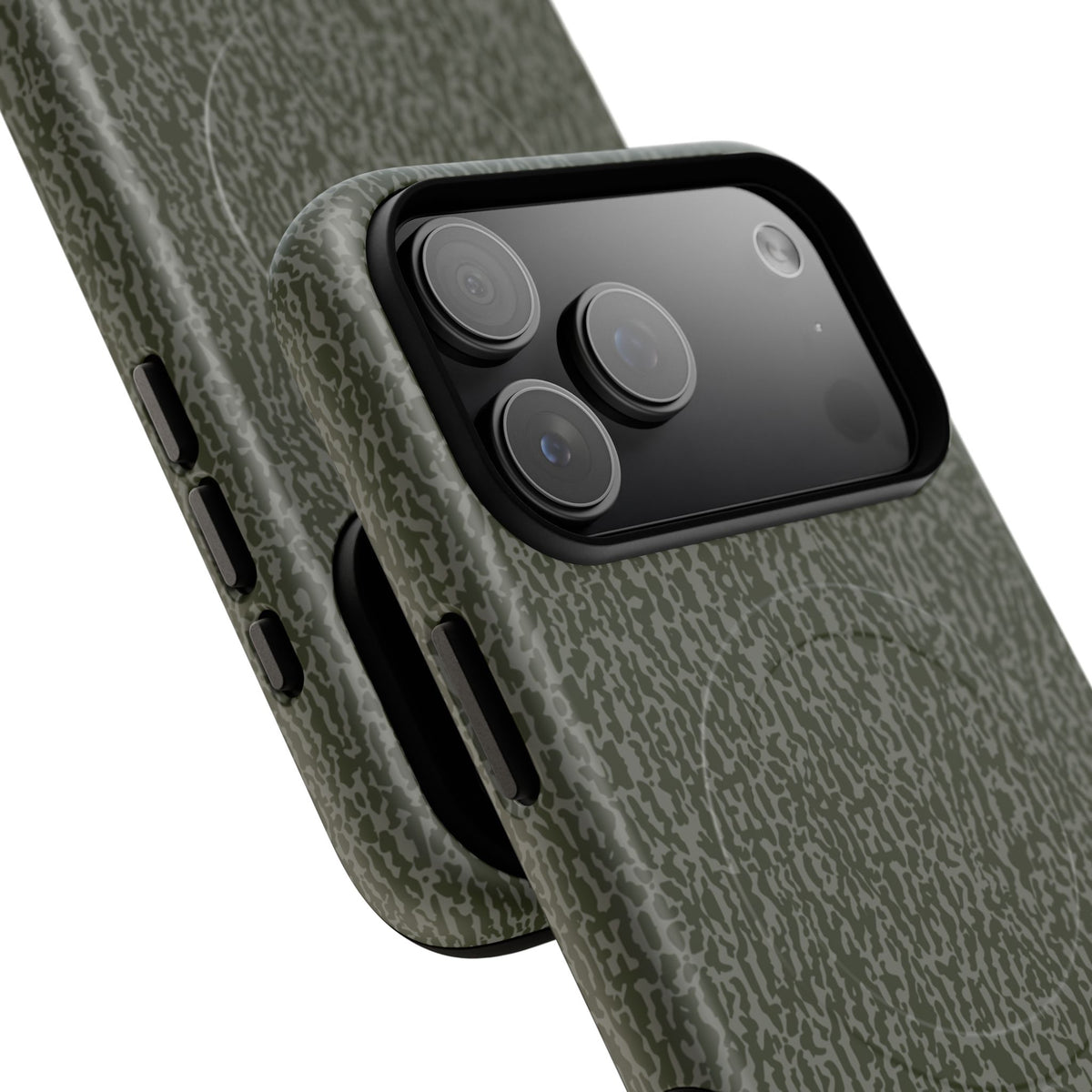
Wz. 68 Moro Camo MagSafe iPhone 17 Pro Max Field Case
Wz. 68 Moro Camo MagSafe iPhone 17 Pro Max Field Case
Couldn't load pickup availability
Details
Description
Equipped with dual-layer construction, the wz. 68 Moro Camo MagSafe iPhone 17 Pro Max Field Case is designed to provide reliable protection while referencing a classic Polish camouflage pattern. The outer shell is made from rigid polycarbonate, forming a strong barrier against scratches and everyday wear, while the inner black TPU lining cushions the device against impact. Together, these layers balance stiffness and flexibility, helping the case absorb shocks without compromising its functional profile on the larger iPhone 17 Pro Max.
The case features the Polish wz. 68 “Moro” camouflage pattern, originally developed for temperate and woodland environments. Rendered in two tones of desaturated green, the design uses vertical, brushstroke-style elements that form narrow, striped bands across the surface. At close range, the pattern reads as layered strokes and fine texture; at distance, it settles into a subdued field that breaks up the silhouette without high contrast. On a phone case, this geometry translates into a restrained, utility-focused surface that nods to Polish field uniforms while remaining understated enough for daily urban use. Printed in a full-wrap format across the exterior, the pattern links historical combat textiles to contemporary hardware, giving the accessory both visual interest and archival depth.
This case integrates a magnetic module compatible with MagSafe® accessories, allowing secure attachment and reliable alignment with chargers, wallets, and mounts. The matte protective finish helps resist fingerprints and glare while keeping the brushstroke pattern legible, making the case practical for everyday use and appealing to camouflage enthusiasts and collectors. Built specifically for the iPhone 17 Pro Max, the design emphasizes durability, impact protection, and clean integration with the device’s ecosystem.
Specs
• Camouflage: Wz. 68 Moro
• Format: iPhone 17 Pro Max
• Impact resistant
• Materials: 100% polycarbonate (shell), 100% TPU (lining)
• Dual-layer case for extra durability and protection
• Includes magnetic module compatible with MagSafe® accessories
• Matte protective finish
• Full-wrap print on exterior surfaces
Shipping & returns
Free US shipping on orders over $95. Shipping calculated at checkout. 30-day returns.
Safety & compliance